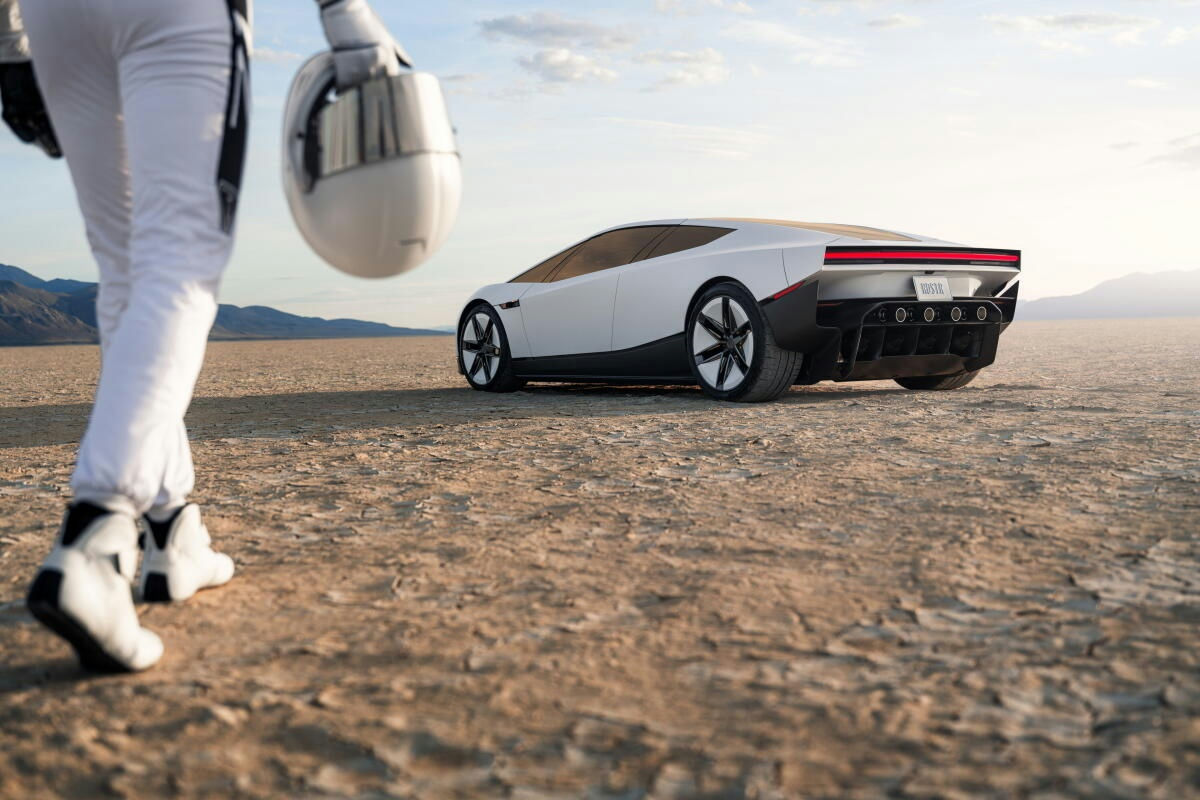
With all the angst being experienced in the critical automobile industry from traditional manufacturers, it is awe-inspiring to see the capabilities of the Tesla Roadster, as shown. Despite the spectacle, the vehicle serves primarily as a way for Mr. Musk to elevate his brand, particularly among younger consumers.
Heretofore, a car was a car, and a plane was a plane. Automobiles were meant to stay on the road and drive at a reasonable speed, although the reasonable part has been increasing steadily over the past several decades. Conversely, planes were completely different with numerous controls on training, flight patterns, maintenance, and numerous other items.
The rub is that the new Roadster breaks the mold of what is expected from vehicles. In the area of speed, it promises to be the fastest production vehicle ever at speeds more than twice as fast as the fastest road vehicles:
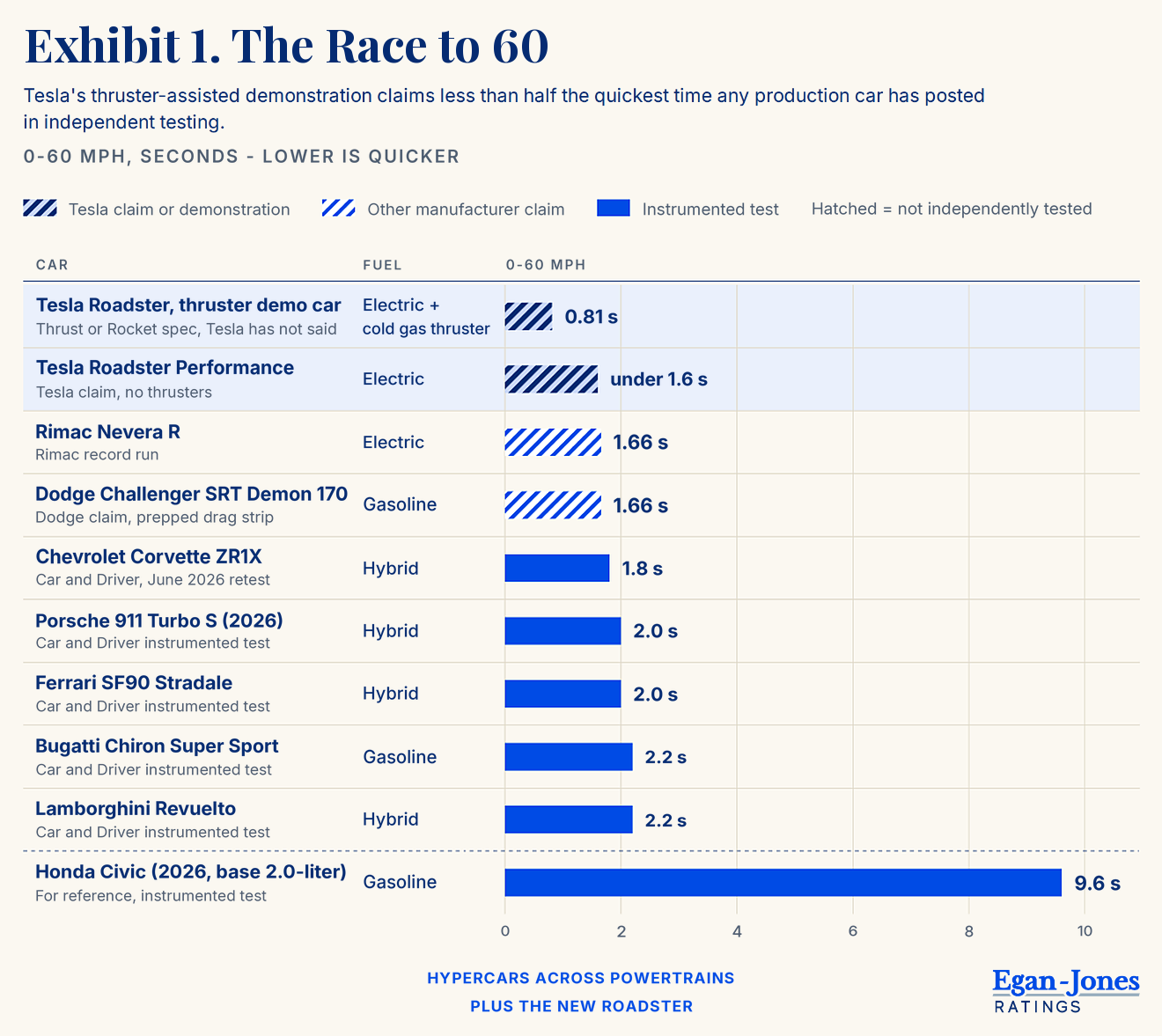
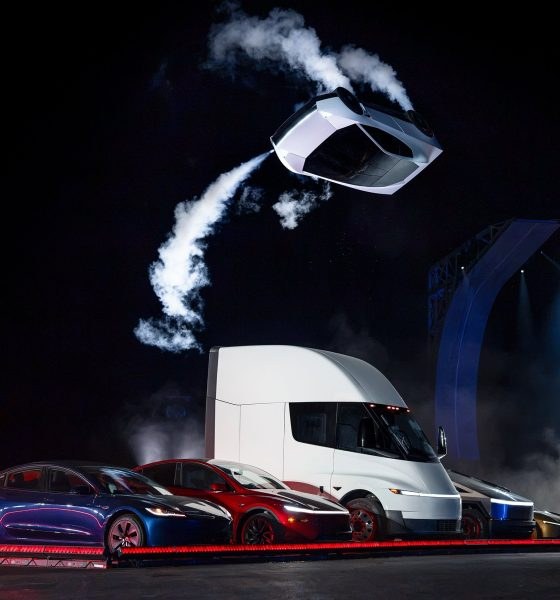
Instrumented times use the standard one-foot rollout; conditions and setup move results, as the ZR1X showed when a retest cut 0.3 s from its first run. Rimac and Dodge figures are their own claims, the Demon 170's set on a prepped drag strip. The Roadster figure is Tesla's own claim from its October 15, 2026 demonstration of a preproduction car with cold gas thrusters firing. Tesla has not said which spec made the run: it claims under 0.9 s for the two-seat Thrust and under 0.59 s for the single-seat Rocket, so 0.81 s fits the Thrust claim. Production is planned for 2028.
While these figures are impressive, it's important to note that the Tesla Roadster is slated to release in various specs, only one of which has the aerial acrobatics capabilities shown off. It's unclear what corner-cutting had to occur for the demo to be successful. Further, it's unclear how software will lock those features or if the product will ever be released. Recall that the prior Tesla Roadster redux was announced in 2017 and it never was released.
Perhaps the release never occurred because electric supercars have sold poorly since their introduction. Examples include Porsche Taycan (global sales roughly halved in 2024 to about 21,000), Audi e-tron GT (low volumes since launch, well below early expectations), Lotus Eletre (Lotus’s move into volume EVs, with sales well short of ambitions), and Lucid Air (performance-led sedan with deliveries well below production targets). Tesla itself discontinued its higher-end vehicles, the Tesla Models S and X.
However, Mr. Musk has likely achieved much of its intended effect without selling a single vehicle.
Halo: The impressive product demo, no doubt, elevates the Tesla brand, particularly among younger tech-focused individuals.
Shore Up Approval Ratings: Mr. Musk is keen to gain public approval for himself and his brands following his acquisition of Twitter and close relationship with Republicans. This would be of increasing importance should Republicans lose the White House in 2028. In a similar vein, Elon Musk has sought to gain additional favor by pledging a share of SpaceX to every child in America.
Ceding ground: Legacy auto firms, including some of the storied sports car makers, have ceded ground to the “tech bros” who are, yet again, changing another major industry.
Mass market: Despite the impressive presentation, Tesla appears best suited to earn from the mass market (e.g., Model 3 and Robotaxi). As we've stated previously, we await Tesla releasing unsupervised full self-driving to other vehicle manufacturers. If the technology works, such an offering could yield high margins, at high prices, at high volume.
Insurance: Auto insurers also could face significant disruption given lower premiums and perhaps competition directly from Tesla.
As car enthusiasts, this has been one of the more enjoyable installments to write. Our suspicion is the recent layoffs announced by VW and others might just be the start of a larger shift.
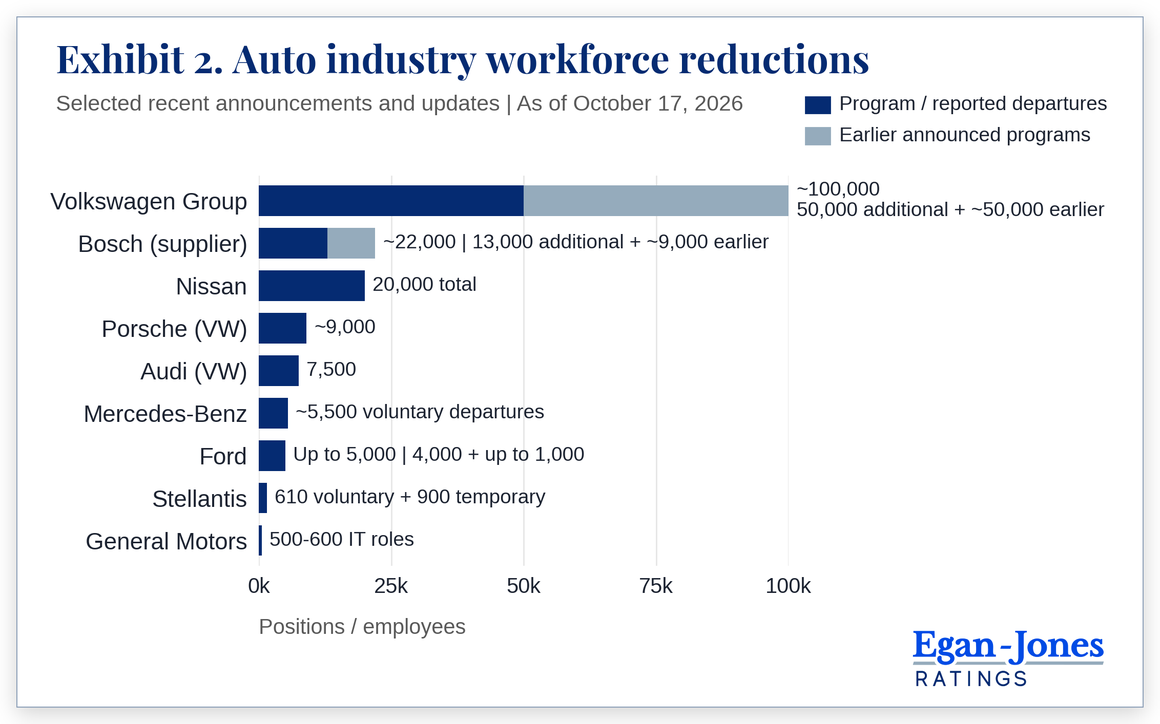
Plans and reported departures cover different periods; these are not all completed layoffs. Do not sum: Audi and Porsche overlap with Volkswagen Group. Daimler Truck excluded.
The latest Egan-Jones sovereign rating actions.
The latest Egan-Jones ratings for 15 sovereigns are below, each shown against its prior rating. Each country links to its full rating analysis; the complete list is at egan-jones.io/non-nrsro-ratings/sovereign.
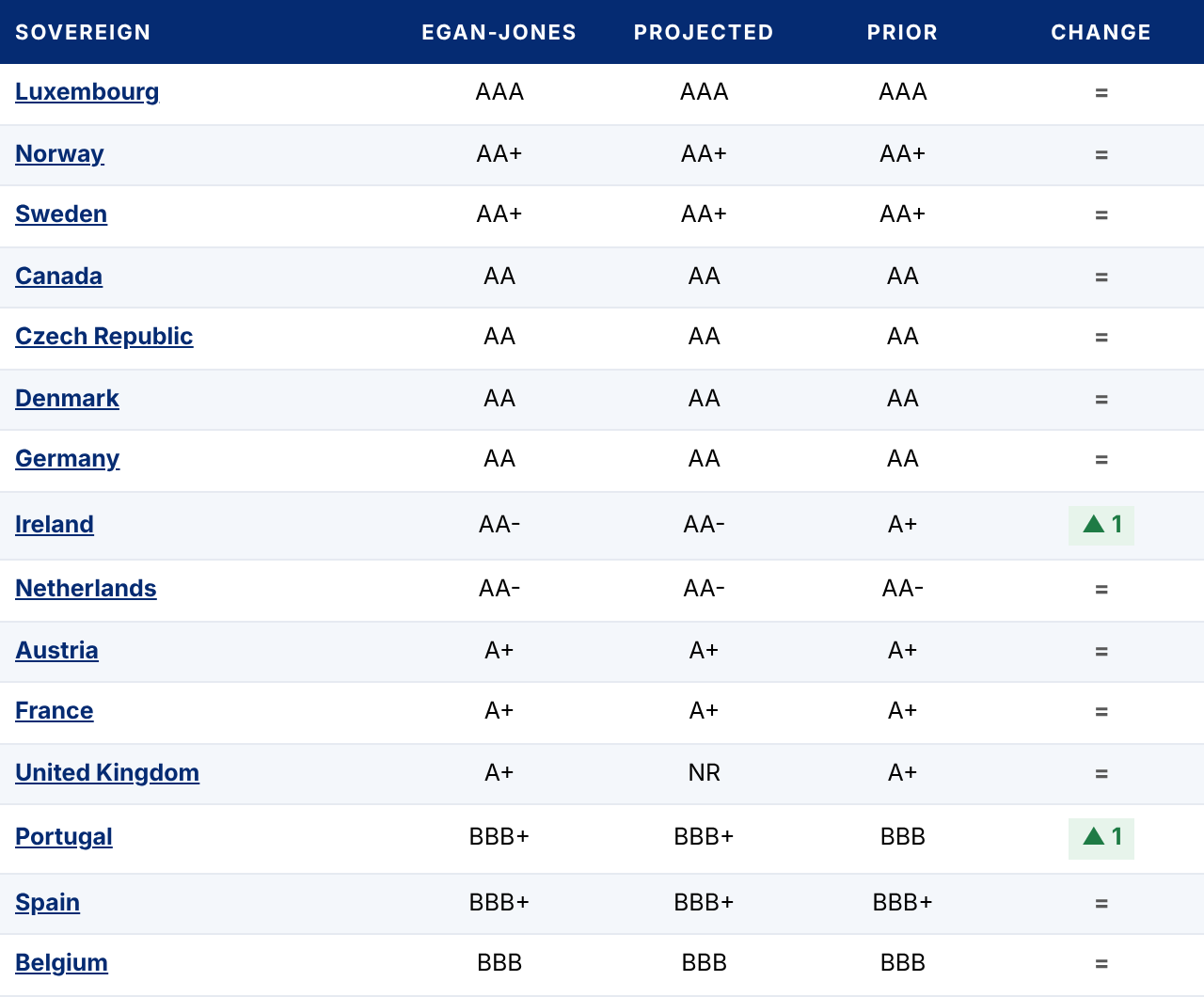
Change compares each latest rating with the prior one, in notches (one notch is one step on the scale, e.g., A to A+). Green is an upgrade and “=” an affirmation. The United Kingdom’s projected rating also moved, from A+ to NR. Local- and foreign-currency ratings are the same for every sovereign shown. Egan-Jones sovereign ratings are not NRSRO ratings.