World has rapidly shifted, altering investment and credit conditions; we assess recent changes and implications for institutional investors.
Published on
April 24, 2026
Overview
Whether appreciated or not, the world has massively changed in the past few days, bringing with it significant shifts in the investment and credit environments. This installment aims to address some of those changes and implications for sophisticated institutional investors and risk managers.
A Faustian Bargain
The Iranian War was started in an attempt to curb the nuclear ambitions of Iran, which, in turn, presumably was building its nuclear program in an attempt to protect its sovereignty. While on its face, nuclear power might appear to be a panacea, it comes at a great cost, primarily in the form of sanctions and massive declines in living standards. Look no further than the massive collapse in the Iranian currency over the past few years.
Figure I: Iranian Rial Value (USD per 1,000,000 IRR) - 10 Year Trend
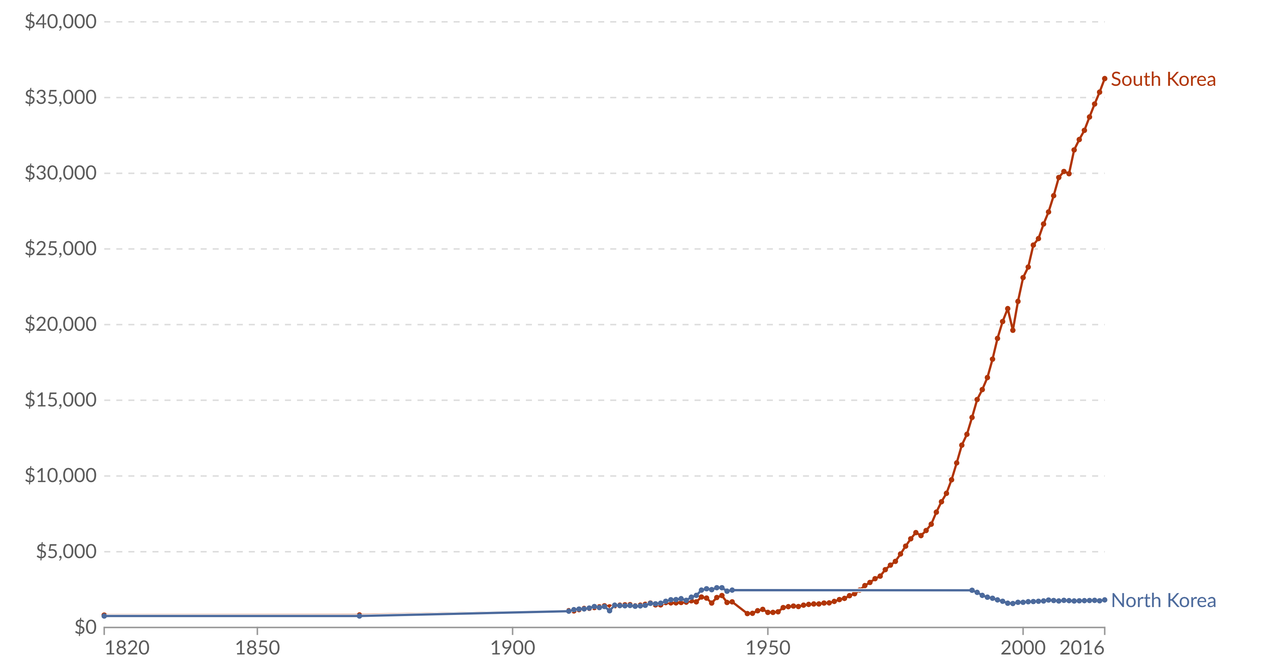
Perhaps North Korea is an example. While the country built a massive arsenal, its economy has been a disaster, particularly in comparison to that of South Korea. However, for the leaders of undemocratic regimes like North Korea or Iran, broad prosperity is not imperative. Leaders of all countries seek political stability, however leaders of undemocratic regimes do not need the active consent of the governed.
The irony is that Iran is an extremely difficult country to invade (because of its size and geography) and perhaps the greatest threat comes from within. It is apparent from negotiations that sanction relief is a key item.
The latest developments are Washington’s closing the Strait of Hormuz to all shipping, thereby depriving Iran of a majority of its revenue. In response, Iran is threatening to attack all ports in the Persian Gulf and Gulf of Oman. In the meantime, Iran’s president supposedly claimed a deal will be reached if the US is more respectful. Our view is that it is in most parties’ interest to reach a deal, hopefully soon.
A Few Changes
While the terms of a settlement are still being negotiated, it is probably helpful to review some likely final terms:
Control of the Strait – possibly the Strait of Hormuz will be jointly controlled by the US and Iran with tolls being applied to traffic. Presumably, the US will represent the interests of the other Gulf states and is likely to seek reimbursement for the funds expended to date.
Controls on Nuclear Development – the fear throughout this process has been that Iran, either directly or indirectly, would use nuclear weapons to attack its perceived enemies. Although agreement on this item has not yet been achieved, we expect an accommodation to be reached.
No Regime Changes – for those who had hoped for a regime change in Iran, it won’t happen under the pending accord and is probably only possible via an internal uprising. With Venezuela as a mold for the current administration’s approach, the goal is to carry on despite philosophical differences on governance.
No “Endless War” – perhaps the administration realized the difficulty of eradicating all means for Iran to disrupt traffic in the Strait, (such as drones, speedboats, missiles, mines, etc.) and shifted to those actions which would cause more immediate harm (such as curtailment of power generation). Hopefully both sides realized there is a better path for achieving their respective goals.
American Restraint – Throughout the war, America has been unwilling to destroy the economic capacity of Iran. America continues to observe the taboo of using her own nuclear weapons even to prevent further nuclear proliferation. American leaders also were unwilling to strike the most impactful targets including water treatment plants, electricity generation plants, oil refining plants, and symbols of the regime such as Milad Tower (a massive telecommunications tower).
A Few Implications
Now comes the hard part. Although there is still significant uncertainty involved in the negotiations, assuming a deal is reached, there are some resulting implications:
More Expensive Petroleum – Tolls imposed will lead to higher prices for consumers of oil, fertilizer, and other products passing through the Strait. Although Saudi Arabia can divert some supply west for transport via the Red Sea, capacity is limited. (Iran’s allies, the Houthis, might again threaten shipments but hopefully will be reined in by Iran.)
A Reset for the European Union – the calculus used by many of the EU countries was that Iran was not their concern and that given the fact that the US started the war, it was not inclined to support it. Setting aside the threat that Iranian missiles could reach Europe, the likely upshot is that the US’s support for the European Union is being questioned. We would not be surprised if the issue of Greenland re-emerges as negotiations with the EU proceed.
The Taiwan Question – given the fact that China imports a majority of its petroleum, it needs energy from the Strait. Since the US will have a voice in traffic emanating from the Strait, perhaps the probability of hostilities has declined.
A Few Caveats
Historians will be writing for years about events in the Strait. Strategically, if the broad outcomes of the settlement hold, it is a major win for the US as it has partial control of a major chokepoint for world trade. Although the outcome looks promising, there are a few items that should give pause at least for those concerning longer-term outcomes. Several major ones come to mind:
GDP Dependency – any nation is dependent on its economy to provide the resources to its military. If major challengers grow faster than the US, then the US has a problem.
Debt Overhang – Historian Niall Ferguson has some thoughts on relative debt levels: "Ferguson's Law" posits that a great power fails when interest payments on its national debt exceed its defense budget. In 2024, the U.S. began violating this law as debt interest surpassed $1.1 trillion, exceeding military expenditure. Ferguson warns this structural fiscal crisis mirrors the decline of previous empires.
Fighting the Last War – drones and advanced missiles have played a major role in the Iran War. The usage of $2M+ Patriot missiles to counter the $25K Shahed and other drones and the possible damage to an aircraft carrier raises concern that despite the destruction of most of Iran’s air force and navy, it retained some ability to strike back. (See prior Risk Commentaries)
Population Collapse – a rising dependency ratio (i.e., retirees versus workers) is a concern for the West.
Israel Et Alia – Israel and others (China and Russia) are not directly part of the agreement and might seek to disrupt matters to protect their own interests.
A Few Hopes / Conclusion
While it is easy to be pessimistic, history has shown that the money is better on the positive side. (Are there any major short sellers left?) Our bet is that conditions will settle down, and some normality will return soon. An item to watch is the recent subsidy request of a major auto company for a factory fire. (More to follow.)
Egan-Jones Insight
Receive the latest insights on the proxy market.
Thank you! Your submission has been received!
Oops! Something went wrong while submitting the form.
.svg)




.jpg)