
Better Home & Finance (NASDAQ: BETR) shareholders have voted to reconstitute the company's board in favor of founder Vishal Garg. On October 5, Better confirmed that holders of a majority of its outstanding shares had consented to the Garg Group's solicitation, ending the contest. Five of the company's eight directors, including Interim CEO Daniel Lewis, were removed.
Egan-Jones recommended that Better shareholders consent FOR the solicitation in our research report published on September 15, 2026. Our recommendation stood apart from the two other leading proxy advisory firms, both of which sided with Better's incumbent board, and was in line with the decision that a majority of Better's shareholders made. We reached our conclusion for three main reasons:
The outcome does not, by itself, reinstate Garg as CEO. Its practical effect is a reconstituted board that can draw on Garg's product and strategy expertise as the company settles its permanent leadership.
Better was founded in 2014 by Vishal Garg after a frustrating, drawn-out experience buying his own home convinced him the mortgage process was broken. The company built its brand on speed and technology, using its proprietary AI platform, Tinman, to automate much of mortgage underwriting and approval. Better has funded more than $110 billion in loan volume since inception and became publicly traded in August 2023 through a merger with a SPAC.
The timing of that debut was difficult. Rapid interest rate hikes in 2022 and 2023 sent mortgage origination volumes tumbling across the industry. Even so, in the two years before Garg's departure, Better's total shareholder return (TSR) was 14%, greater than any other company in its peer group.
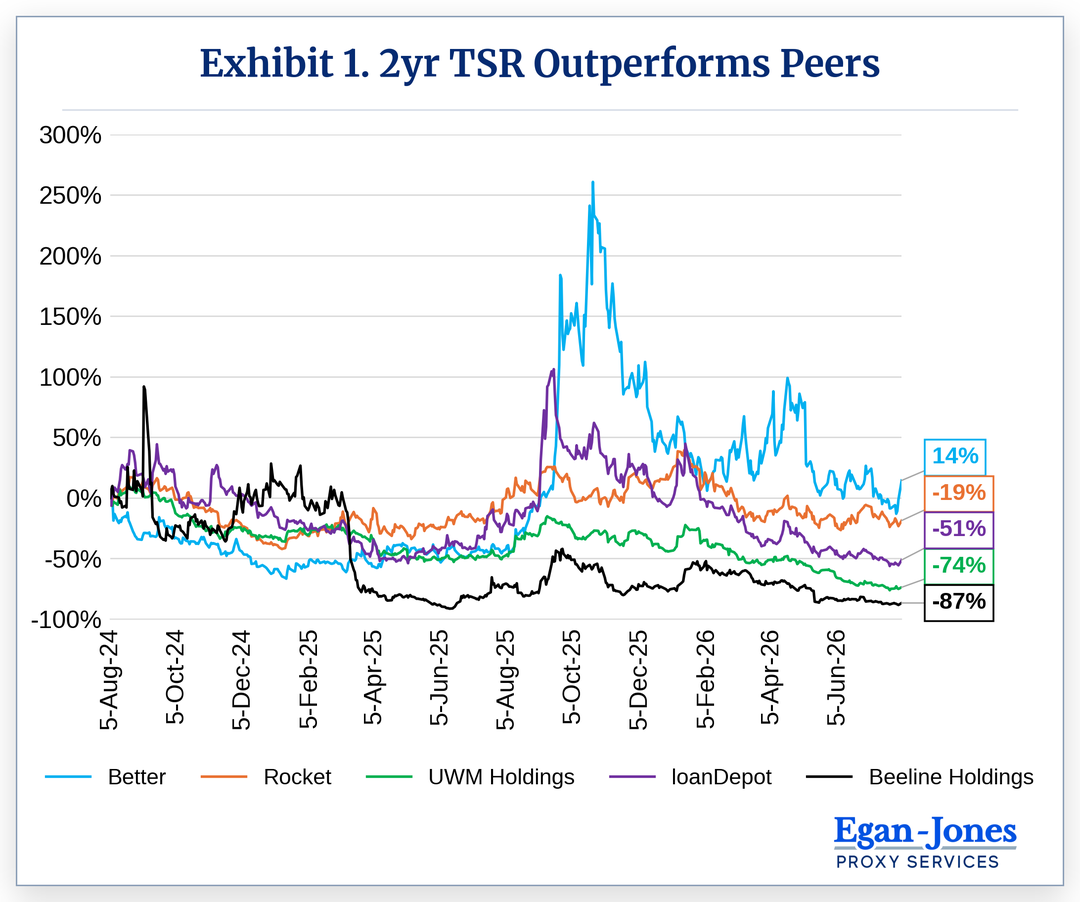
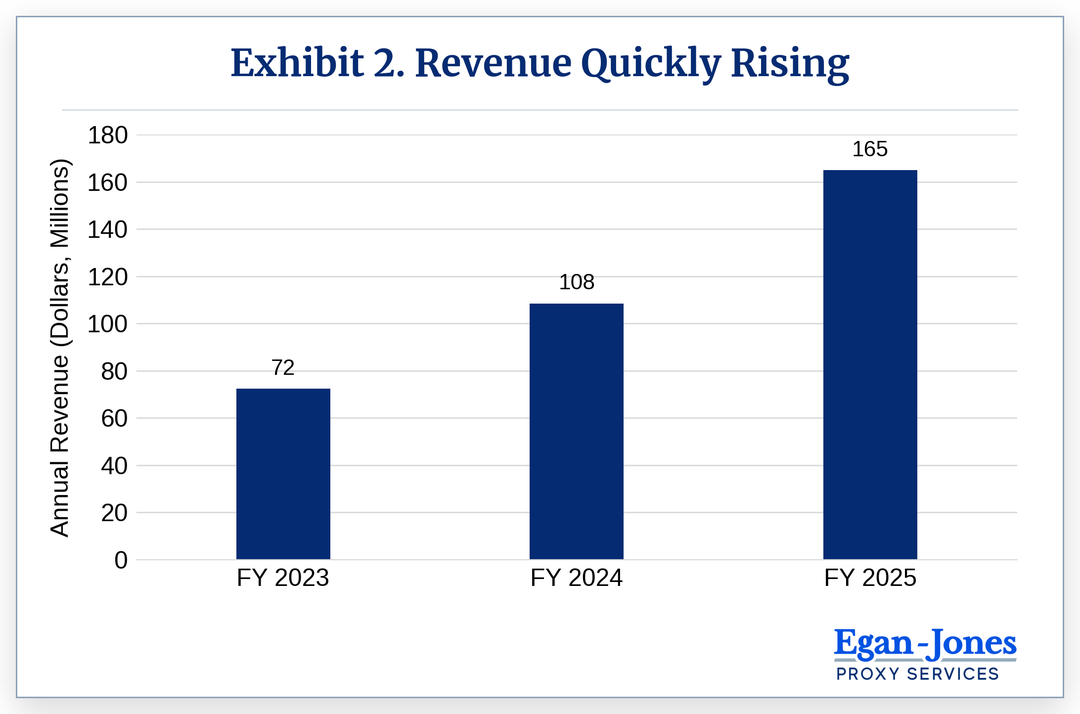
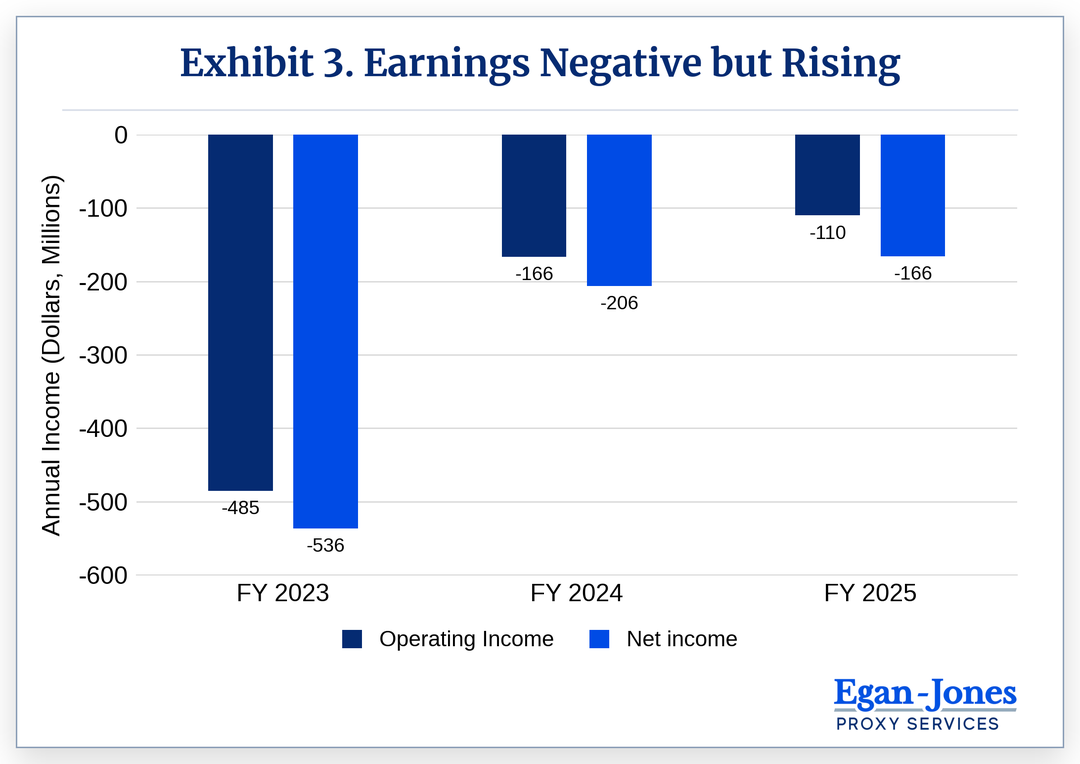
The market's confidence in BETR was largely tied to its revenue, which rose quickly year after year, and its earnings, which, while still negative, were steadily improving.
Neither side disputed that Better's strategic direction stayed the same after Daniel Lewis took over as interim CEO. Continued investment in Tinman, cost discipline, expansion into home equity products, and the planned sale of Better's UK banking business remained part of the plan under both regimes. Lewis did not present a new strategic direction, only an intent to execute the existing one differently.
That made the contest about execution rather than strategy. Several of the wins management cited as progress under new leadership, including expanded cost-reduction initiatives (from $25 million to $45 million annually) and a completed Credit Karma home equity partnership, were built and announced under Garg, some in the days surrounding his own termination. In our view, this weighed in Garg's favor: he was the architect of a strategy that was already working, and there was little basis to conclude that someone else would execute it better.
Better's board cited concerns over Garg's judgment, credibility, and organizational complexity to justify his removal. Those concerns were difficult to reconcile with the board's own conduct. Garg was terminated the same morning the board was reportedly celebrating the Credit Karma partnership. According to the Garg Group, Better offered him a Vice Chairman and Senior Adviser role two days after firing him, and certain directors approached him four days after that suggesting the decision had been a mistake.
The market's reaction added weight to those concerns. In the roughly five weeks following Garg's removal on August 3, Better's stock fell approximately 53%, sharply underperforming every peer in the comparison group. Several senior leaders also left, including Better's President, its COO, and the executive who led Tinman.
With the contest settled, the focus shifts from governance to execution. Shareholders should watch how the reconstituted board, now cut to five seats with Bing Gordon and Steven Sarracino among the new directors, approaches permanent leadership, whether Better can retain or rebuild the senior team it lost, and whether the cost and home equity initiatives deliver.
Management's case looked reasonable at first glance: repeated negative earnings cycles led the board to remove the CEO. But when the underlying details were brought to light, we concluded that shareholders would be better served by a board that restored Mr. Garg's influence over the company's direction. A majority of Better's shareholders reached the same conclusion.