.svg)
.png)
Overview
Our fundamental premise is that a country needs neither manned sea vessels nor manned planes to be an effective military force. Using the “faster, better, cheaper” model, missiles and drones now trump most traditional weapon delivery systems. The implications are widespread and are massively relevant for sophisticated institutional investors and risk managers.
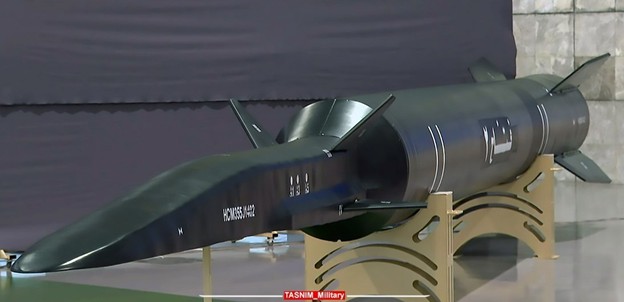
These recent developments make missiles and drones far more effective:
Ultimately counter measures will be adopted, but it appears the advantage is with the attackers. Just as in World War II carrier battles, the advantage was with the side which attacked first, perhaps the advantage here is again with not only the side which attacks first, but also with the side which can hide its assets. On this score, it is clear that Iran has the advantage with a diverse and hidden drone/missile system and the apparent ability to build additional drones at a fairly rapid pace.
It is becoming increasingly clear that missile defenses are difficult and perhaps can never be sufficiently effective.
If our premises are accurate, the implications are massive. Israel and the U.S. have succeeded in antagonizing and further radicalizing a state they have no possibility of defeating. Additionally, if one assumes Iran has nuclear material, which it certainly does, there are some elements which will push hard to use that material. Lastly, one can assume Iran will exact a heavy price for the re-opening of the Strait of Hormuz. Additionally, the message extends beyond Iran as China, Russia, and possibly North Korea are aiming to learn from this rapidly evolving episode. We have yet to find out how an aircraft carrier effectively defends itself from a swarm attack of drones and directable hypersonic missiles.
We hope that our analysis is wrong. However, if we are correct, U.S. leadership appears to have tragically flawed views of its capabilities and untangling the mess in the Middle East will take time and will be expensive.


.jpg)