.svg)

Much attention is placed on the contributions of entrepreneurs and their years of struggle to establish successful businesses. Countless stories have been written about Steve Jobs, Elon Musk, and Bill Gates. However, the stories do not end there. For a company to be truly great, it needs to instill the “right” leadership to carry on the company traditions. This installment will hopefully assist in assessing whether companies have the right leadership to build value and credit quality over time.
Steve Jobs is a hero to many, having established a ground-breaking firm and made it look cool in the process. Whole courses are taught in business schools on the methods Jobs used to create and establish Apple as the premier firm in a variety of consumer electronics areas: the phone, the tablet, and the PC.
What is often forgotten is that Jobs left Apple 14 years ago, yet the firm still dominates those categories. Under Tim Cook’s guidance, the company has not only continued to dominate its respective markets, but also its market capitalization has grown by a factor of 10!
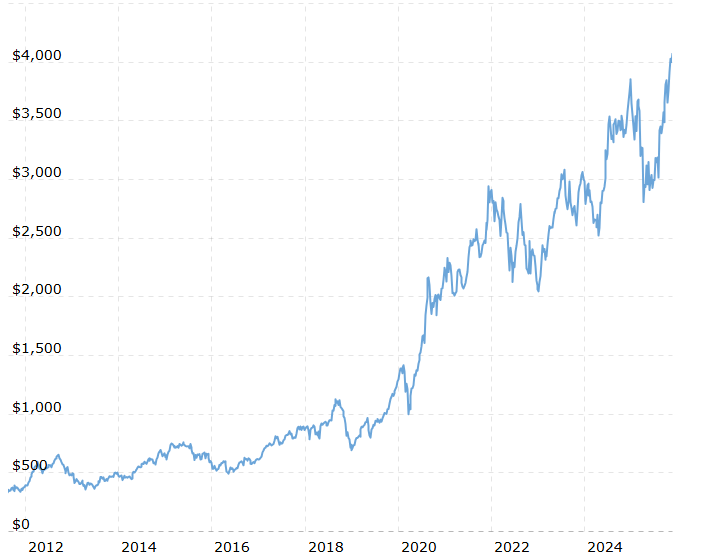
Likewise, under Bill Gates, Microsoft has gone from a little-noticed supplier to the IBM PC to being THE dominant operating system for all non-Apple PCs. Again, under capable leadership (primarily Steve Ballmer and later Satya Nadella), Microsoft has navigated the ever-changing shoals of the global PC market. Google (renamed Alphabet) likewise thrived over the past ten years under the leadership of Sundar Pichai while Sergey Brin and Larry Page garnered the accolades.
Our premise is that while the glory goes to the founders/visionaries, the sustainable value creation often comes with competent managers who have a deep understanding of the business and can often guide the organization in a manner that the often-mercurial founders never could. Furthermore, the real building of value and credit quality is derived from taking the initial attractive offering and extending its footprint into a variety of markets.
Famed investor Warren Buffett is often recognized as being one of the most successful investors of all time. Historically, Mr. Buffett extolled the virtues of Value Investing, that is purchasing businesses in which the value of the assets exceeded the market capitalization. The writings of famed Depression-era investor Ben Graham were generally considered to be the bible of value investors, and Mr. Buffett was among his most notable acolytes. We raise this issue because Buffett started buying Apple in 2016 after Steve Jobs departure. While by most accounts Apple did not fit the typical framework for value investors, Mr. Buffett (or rather Berkshire Hathaway) experienced massive gains.
Our view is that the definition of value investing has shifted and with it the increased appeal to what might be called Nouveau Value Investors. Perhaps Buffett and others saw that Apple had entered a new phase with Mr. Cook at the helm and that it was at a reasonable price relative to growth. In other words, while the company was expensive from the traditional value investor’s perspective, assuming even some reduction in growth, the value remained and was building.
The irony is that growth probably would not have been realized by a Jobs-like personality as it required a completely different leadership style.
Being successful as a sophisticated institutional investor and risk manager is not always easy and there are few hard and fast rules. Hopefully this installment is helpful in identifying some additional pathways.


.jpg)