.svg)

As mentioned previously, war is a dangerous and expensive undertaking. Defeat and Pyrrhic victory can be devastating to a nation as measured by blood spilt and treasure spent. There are few undertakings which are more costly: $8.3 trillion is the estimated total cost of the wars in Iraq, Syria, and Afghanistan. For years, the US public thought it was winning in Vietnam and Afghanistan, with the promise that a few more bombing runs would do the trick.
Our fear is that the low-cost, decentralized drones, missiles, and intelligence networks will make victory elusive. The jump in petroleum prices reflects some of those fears. This installment aims to address some of the implications for sophisticated institutional investors and risk managers.
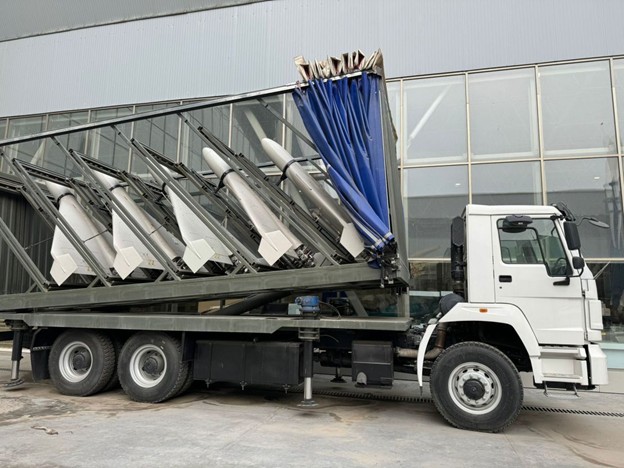
Using Sun Tzu’s The Art of War as a guide, a clever way to defeat a stronger opponent is to make waging war far more costly for your opponent than it is for yourself. It appears that this is exactly the current situation. Assuming the cost of the typical Shahed drone is $25K to $50K and that the US is expending millions on missiles to counter each drone, from an economic perspective, Iran is on the winning side. Additionally, given the fact that the drones are easy to hide, and relatively easy to build, it is not clear that a war based on attrition will be readily successful.
Rope a Dope
The scintillating boxer Muhammad Ali used an unconventional technique in fighting George Foreman, which involved encouraging the larger, more powerful boxer George Foreman to punch at Ali for several rounds whereby Ali would use the ropes to support himself and absorb some of the force of the punches. After several rounds, Foreman found his energy spent and Ali was able to quickly dispense with him via a few quick jabs and hooks. The thought comes to mind that just as the Viet Cong used the tunnels and jungles to absorb pounding from the bombing and hide their activities, perhaps the same is happening but via the mountains and behind civilian targets. Making life particularly difficult for the Americans are the claims that recent bombings hit a girls’ school with over a hundred casualties.
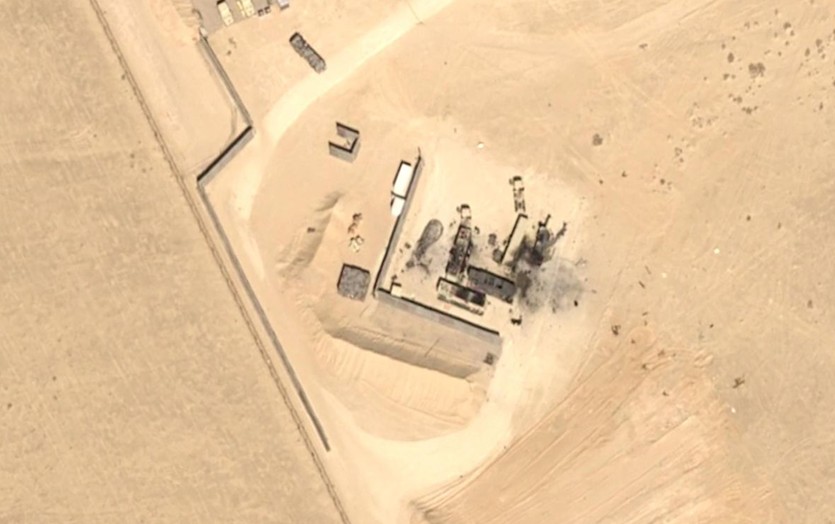
The US adopted the British model of global bases to refit and refuel equipment deployed to distant territories. Satellite imagery and self-guided munitions now allow adversaries to make precision strikes on the most valuable assets on those bases. In some ways, the US lacks an information advantage, particularly when its adversaries are aided by Chinese and Russian intelligence. Reestablishing the “fog of war” is likely to prove difficult, meaning that expensive (particularly stationary) equipment has become less viable than cheaper, distributed alternatives.
If high-volume, low-cost equipment has an increasing advantage in warfare, it implies that the US is poorly positioned, particularly relative to China. Some of the largest public defense expenditures have been expensive weapons systems (e.g. B2 Bomber, F-35, Ford-class aircraft carriers, etc.).
However, if the US is to be successful in modern warfare, it will need to rely more on a broad and deep manufacturing base, notably one that can be repurposed from producing civilian goods to instead producing cheap weapons and intelligence systems.
On the positive side, hopefully the campaign has significantly degraded Iran’s nuclear capabilities. The worry of course is that Iran still has nuclear material and if the leadership does not change its stance, it might use that material in a more nefarious, difficult to counter manner such as a dirty bomb.
China has been supportive of Iran via the purchase of its oil and the supply of various materials such as drone components and military hardware. Given China’s dependence on imported oil and the closing of the Strait of Hormuz, provided Iran cannot distinguish “friendly” from “hostile” petroleum ships, China, of course, suffers.
The assumption is that a substantial amount of military infrastructure has been destroyed in Iran, and therefore the government is near collapse. While much has been destroyed, it is unclear that the time is ripe for a regime change. Per our prior installment, none of Machiavelli’s five rules have been completed:
War typically involves a major fracturing in relations, thereby making it extremely difficult to end conflicts. It is doubtful that Iran will agree to any sort of regime change unless they are forced to do so, and to date, while the bombing has destroyed many targets, it is unclear that the regime is any closer to relinquishing power.
The key for a regime change is to provide the citizens with weapons to counter the government (not only hand weapons, but also anti-tank missiles) or convince the front-line troops to not support the government, neither of which appear to be the case. However, arming those citizens is difficult. There has been talk that the Kurds might help, but (i) the Kurd population is small compared to the Iranians, (ii) it is doubtful the Iranian citizens will accept the Kurds’ support and (iii) the Kurds are more likely to push for their own independence than directly get involved in Iranian regime change.
The Strait of Hormuz is critical for the energy shipments of several Gulf countries:
(Apparently Saudi Arabia is the largest shipper.) The Iranian regime is facing an existential threat. A likely next step is to encourage those countries to place pressure on the US and Israel to stop the fighting in exchange for safe passage through the Strait of Hormuz. The bargaining chips those countries have with the US are (i) the military installations in each of those countries and (ii) significant investment in US industry, most recently in AI.
While not yet voiced, the fear of the current Administration should be that of the upcoming midterm elections, which now appear to be more of a concern with the poor ICE-related publicity and the elevation of energy prices. There is a chance of another endless war, but the more likely path is a strategic withdrawal in the same manner ICE activities were withdrawn from Minneapolis after the political winds shifted. (i.e., Declare Victory and Go Home).
While there has been little discussion of this, yet again, the cost of military engagement is massive. To date, it appears that hundreds of $1M+ Tomahawk missiles have been expended, at least three fighter jets have been lost, and countless smart bombs dropped. At some point, the costs become real.
Ukraine is dependent on US weapons paid by the Europeans and shipped to Ukraine. With the extensive use of those weapons, it is likely that shipments to Ukraine will be restricted.
The recent election of Mojtaba Khamenei suggests that Iran has little intention of shifting its stance. Although Mossad and the CIA might be capable of targeting the new leader, the motivations for the leadership appear to be intact, and might be even more hostile to the West and Israel than before. The US is likely to disengage in the near future, and although the nuclear and military capabilities of Iran have been degraded, the stance of the Iranian leadership appears unchanged, the re-opening of the Strait of Hormuz remains closed, and petroleum prices exceed $100 per barrel. Watch for Iran to pressure its neighbors to limit the US’s use of the bases and for China’s establishing some presence. Perhaps the messages are (i) be careful what you ask for and (ii) the US does not have an effective manner for countering drones, and (iii) the direct and indirect cost of serving as a global policeman is high. We expect to have to revisit this subject in the near future.


.jpg)