.svg)
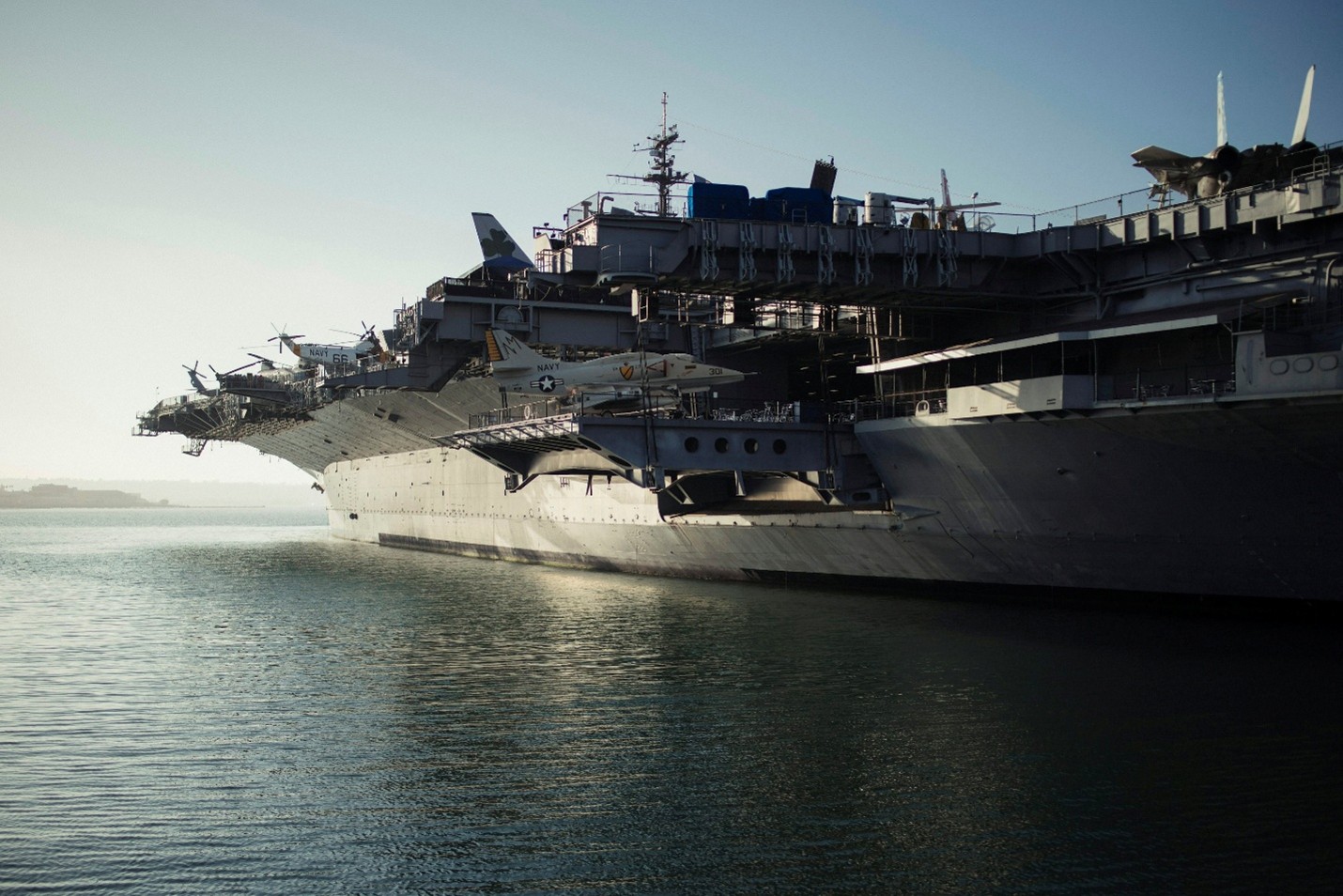
War is a dangerous and expensive undertaking. Winning one typically is cause for massive celebration while the reverse can be devastating to a country and its investors. On the cost side, there are few undertakings which are dearer: $8.3 trillion is the estimated total cost of the wars in Iraq, Syria, and Afghanistan. However, there is another risk which is perhaps even greater, which we address below. For the benefit of sophisticated institutional investors and risk managers, this installment addresses some of those risks.
At the dawn of World War II, warships were THE way of projecting military power far away from home. With the emergence of the Spanish, the Dutch, and the English warships, there was little which could match the firepower and the dominance of these vessels. England dominated the globe with its effective usage of the ship of the line and Lord Admiral Nelson is revered as the hero among heroes because of his military conquests.
As usual, technology has a way of upending prior assumptions. Despite the tremendous firepower of the German battleships the Bismarck and the Tirpitz, along with Japan’s Yamamoto, none played much of a role in the war, with all three being sunk, along with the massive costs of building, maintaining, and supplying the vessels. In fact, one could argue that the ships were a liability as they could not effectively contribute to offensive, nor defensive operations given the high aforementioned costs.
The major technology development which sunk the major battleships’ prospects was airpower, which of course fit the mold of “better, faster, cheaper.” Essentially, no ship was safe against well-coordinated air attack. It was only after a major pivot in the early stage of the war that the Allies were able to secure the right equipment (in the form of carriers) to see them through.
Our premise is that once again, the winds are shifting, and few have a full grasp of the “sea change.” As a result of massive improvements in missile and drone technology, aircraft carriers are rapidly slipping from being an asset to a liability. As aptly demonstrated in the Ukraine War, Ukraine, with no navy of its own, was able to sink a significant number of Russian vessels and keep Russia out of most of the Black Sea.
Turning to Iran, and the presence of several carrier groups, it escapes us how an aircraft carrier can defend itself from a massive attack of drones and missiles, including multiple hypersonic missiles with massive kinetic destructive power. No doubt many of the attackers would be disabled, but the destructive power of even one or two is likely to cripple a carrier.
Now for the counterargument: and that is, with overwhelming force in part delivered via carriers, the U.S. was able to snatch Venezuela’s Maduro with minimal casualties. Yes, Venezuela had sophisticated missile defenses and some modern aircraft. However, Iran appears to be a different case in the sense that it has been engaged in attacking shipping in the Persian Gulf for years and is advanced in its usage of both drones and missiles. In fact, Iran has long been supplying Russia with Shahed drones.
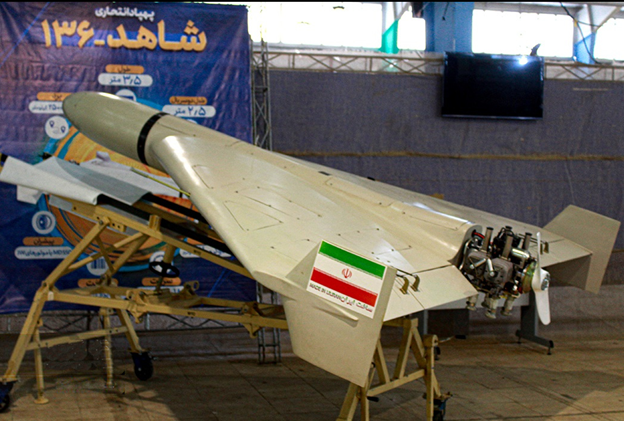
Assuming that (i) missiles and drones are a more effective means for raining down destruction on one’s enemy, (ii) there is a need to project power, and (iii) swarms can overwhelm most defenses, what is the best approach? The short answer is that we do not know, but we have some ideas.
Perhaps a good starting point is the assumption that any asset is vulnerable. Despite the promise of fast-reacting lasers and other technologies, it is probably safe to assume that any target can and will be hit. For example, there has been no discussion of a real defense against a swarm of semi-submerged “sea babies” developed by Ukraine and used in the Ukraine War. Hence our premise that “small is beautiful” and the corollary “big is ugly.” Perhaps the trick is delivering some of the firepower of the carriers but with less of the vulnerability.
If our premise is correct, then the carriers near Iran are likely to be more vulnerable than generally assumed. The striking of one or more major vessels would very well significantly change the trajectory of the current administration. (In such a case holding control of the House is doubtful.)
Much ink has been devoted to protecting Taiwan from a takeover by China. A key item ignored by many is the fact that many of the drones used in the Ukraine War are powered by components supplied by China. Therefore, if the assumption is that a carrier can defend itself against a swarm of 100 drones, what might be the outcome if the number is several hundred, or several thousand? The funny thing about technology is that it is often difficult to envision future implications.
A botched attack on Iran and an embargo or more drastic action against Taiwan are likely to have massive implications on the investment climate. TSMC and other Taiwan-based firms are critical to many of the chip-dependent businesses. Boxer Mike Tyson has some experience in fights, quipped, “Everyone has a plan until they are punched in the face.”
We have covered much ground in the installment. If the premises presented are accurate, the West is woefully unprepared for the future, and it will dramatically change the investment landscape.


.jpg)