
Our installments aim to address those developments which have the greatest impact on sophisticated institutional investors and risk managers. In a development anticipated by few and generally underappreciated, the dominant source of the world’s energy and feedstock has been curtailed.
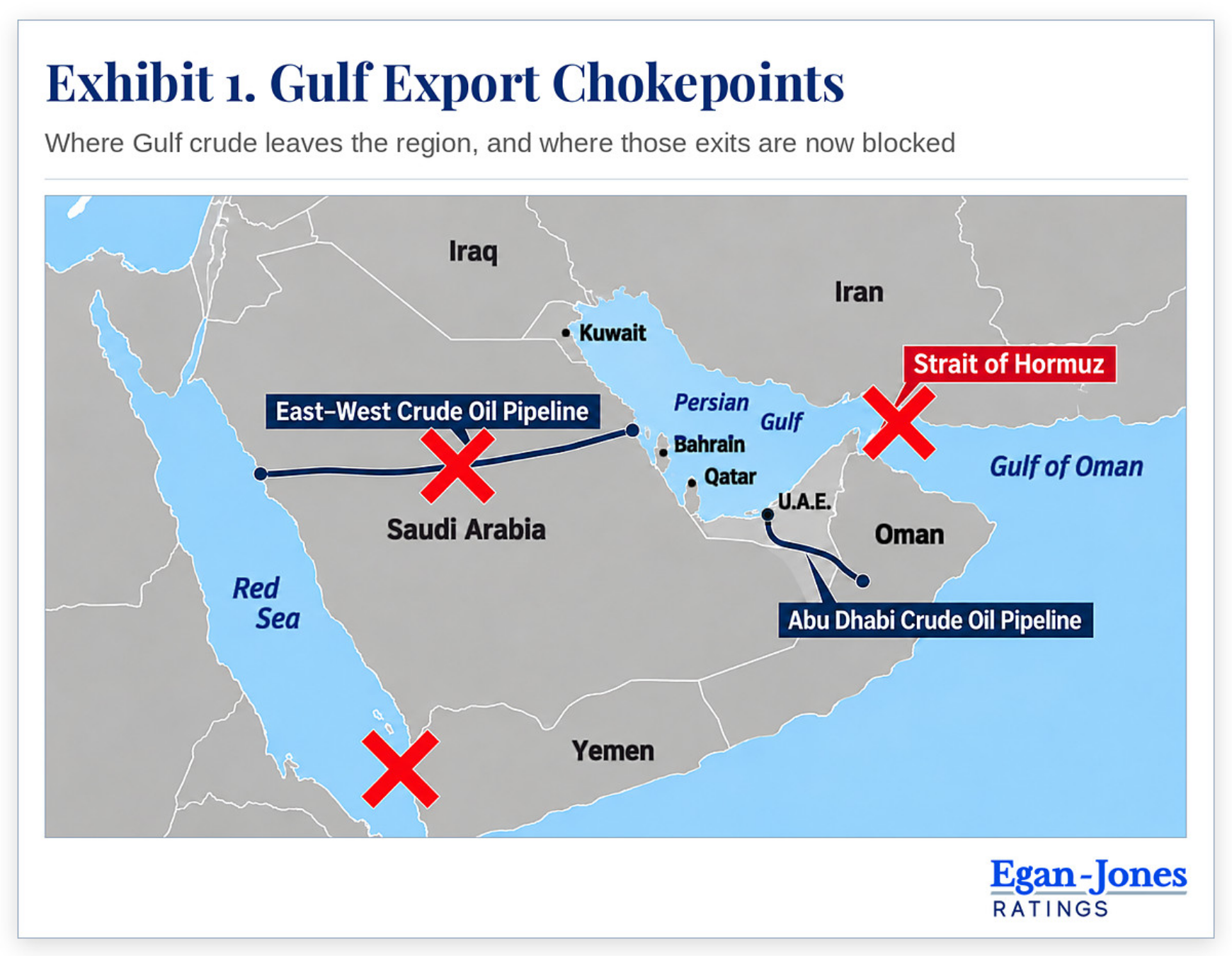
The Houthis’ control of southwestern Yemen and Iranian militias bombing the East-West Pipeline have effectively curtailed a large portion of energy exports from the Gulf. Small exceptions are the few ships traveling north via the Suez Canal, and those vessels bearing American flags traveling south. While the U.S. has placed considerable pressure on the IRGC controlling Iran, relatively few vessels are exiting. Also note that the Suez Canal could be targeted by Iran or its proxies via drones. This could occur either by attacking ships directly or by dropping mines. Recall the multi-day closure of the canal in March 2021 when the Ever Given became lodged. Thus, the only remaining egress of oil from the region is not guaranteed.
On paper, the Saudi Army has a large population, but fewer troops than the Houthis.1,2,3
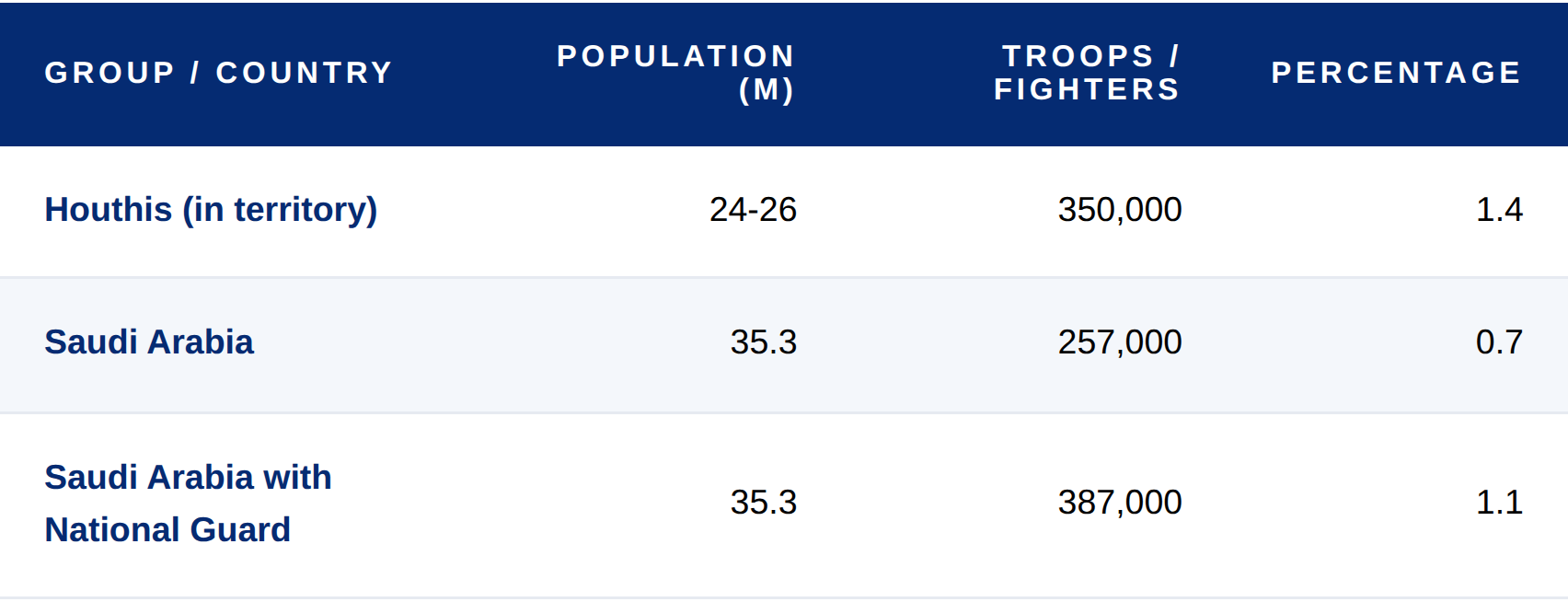
However, the Saudi strength has withered and apparently a good portion of the army is staffed by foreigners and presumably is less dependable than would normally be the case.
THE issue for most observers is what might be the terms for a re-opening of the shipping. As of September 20, 2026, Iran’s most recent publicly stated conditions for ending the current war with the United States and Israel are:
Mohsen Rezaei, secretary of Iran’s Supreme National Security Council, said these conditions had been delivered to Washington through Qatar. Iran is awaiting the U.S. response.4
There are a few considerations (mostly unspoken) involved in the process:
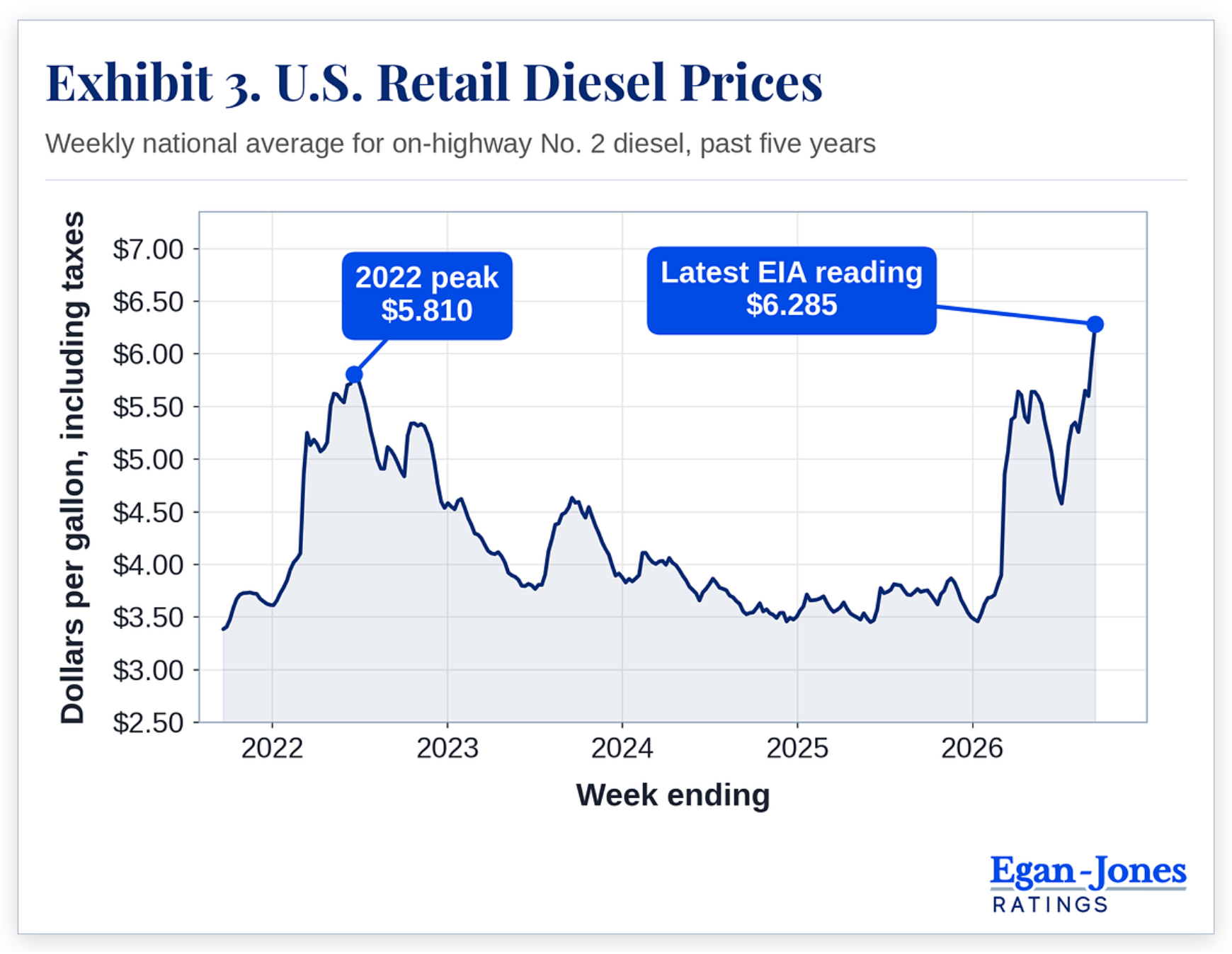
If the petroleum flows are not restored shortly, the probability of a recession increases.The pending summit between Mr. Trump and Mr. Xi might be helpful as many would benefit from an easing of hostilities.
We have prided ourselves in providing advanced warning to sophisticated institutional investors and risk managers of pending developments. We hope we are wrong about conditions, but typically it is best to understand underlying conditions and adjust rather than ignore emerging threats.
Egan-Jones against the other NRSRO on the same tranche, with collateral test cushions.
The ten most recent Egan-Jones CLO tranche ratings are shown below alongside the other NRSRO’s equivalent rating on the same tranche and the current collateral test cushions. Every rated tranche is listed in the complete Egan-Jones CLO ratings table at egan-jones.io/non-nrsro-ratings/clo.
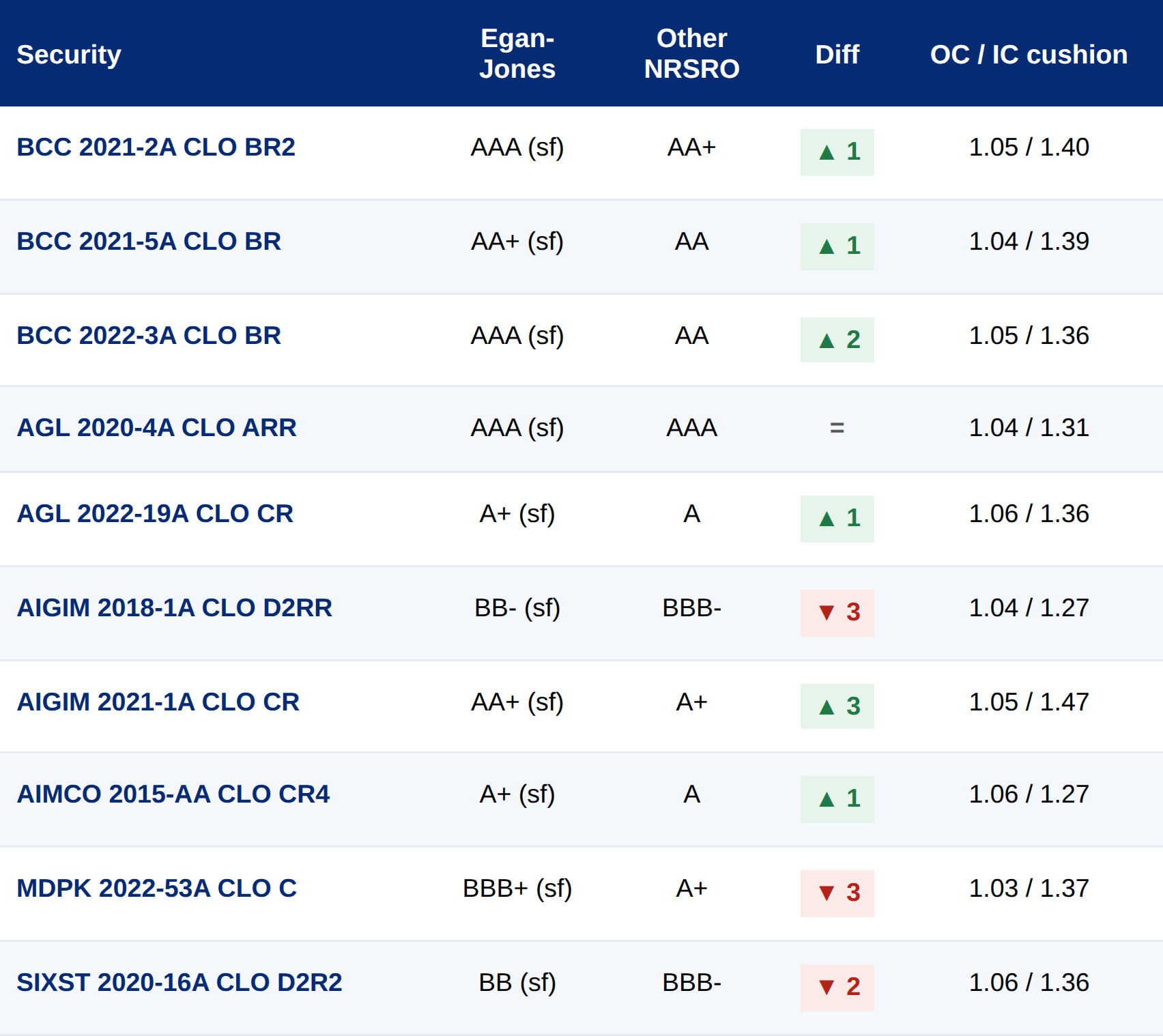
Diff is the gap in notches between the Egan-Jones rating and the other NRSRO’s equivalent rating on the same tranche, measured on a 22-step scale from AAA to D. Green is Egan-Jones higher; red is Egan-Jones lower; “=” is a match. Cushion is the current test level divided by its trigger, so a figure below 1.00 means the test is failing. Egan-Jones ratings shown here are not NRSRO ratings.