

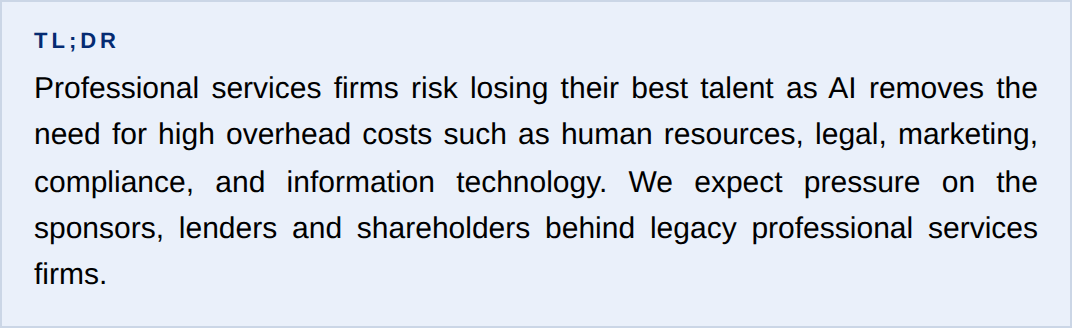
For decades, a lawyer, auditor, consultant, engineer, or physician who wanted to go independent faced significant overhead, so most joined a firm to avoid those large fixed costs (e.g., human resources, technology, legal, compliance and billing). However, AI is massively reducing the activation energy and fixed cost for independent practice.
This installment aims to provide a framework for sophisticated institutional investors and risk managers who own, lend to or hold shares in professional service firms.
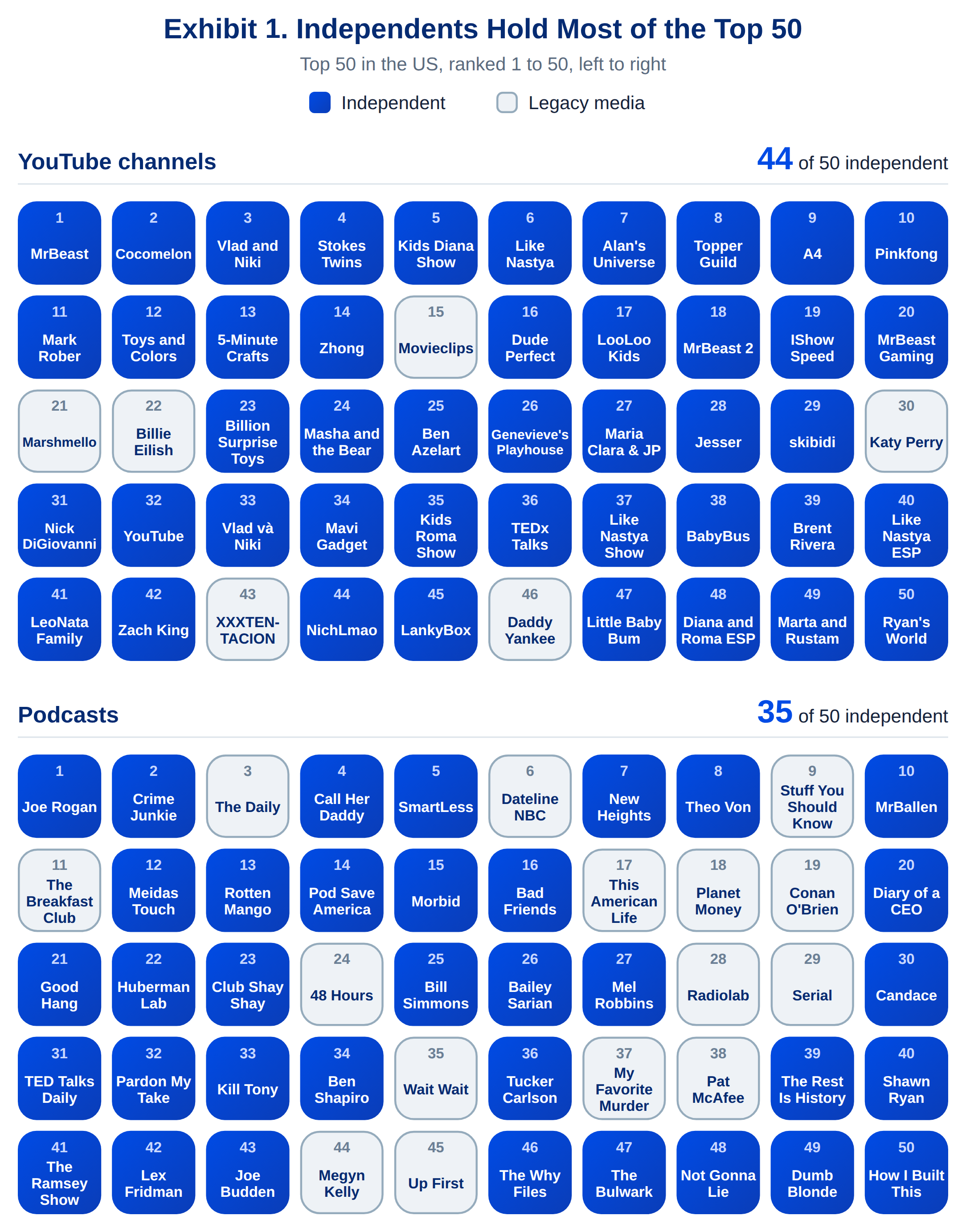
The trend toward independent practice was recently seen in media, whereby the barriers to entry (e.g., a television channel) have disappeared due to novel technology (e.g., the internet and smartphones). As a result, few of the top podcasts and YouTube channels are part of a legacy media platform.
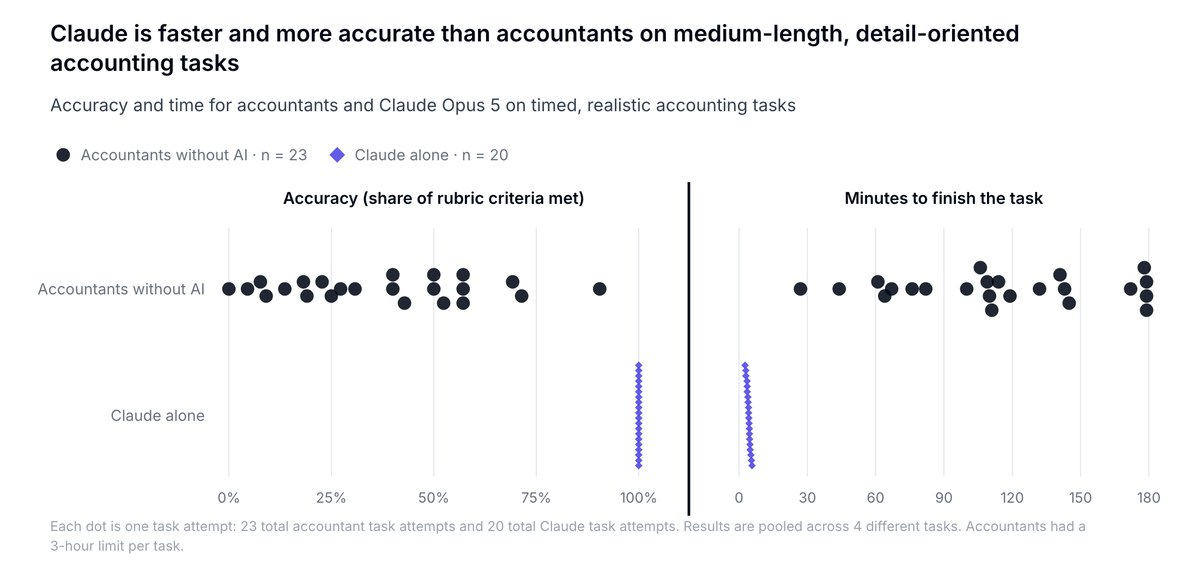
AI is also getting better at the core work these firms sell, not only the overhead around it. Consider the chart below. It effectively shows that Claude performed accounting tasks with 100% accuracy in virtually no time, compared to the much lower accuracy of accountants who required long periods of time.
The pressure lands on everyone behind these firms: sponsors, general and limited partners, lenders, shareholders and the staff paid under the legacy model. Private equity will soon own ten of the 20 largest US accounting firms, opening a notable vulnerability.2
AI lets a little money buy far more information work; otherwise stated, it's deflationary. That suits buyers with money and a use for it, and hurts anyone who is paid under the old model, because the deflation is unequal. By Epoch AI's estimate, a given level of AI performance is getting about 40 times cheaper a year,3 while diesel hit a record $6.53 a gallon in September.4
America has shifted its economy to services and knowledge work (Exhibit 2). Information and knowlege work is getting cheaper to produce as hard goods do not yet see the same price reductions. In time, the savings should impact hard goods too as more efficient manufacturing, logistics, and administration yield returns for customers.
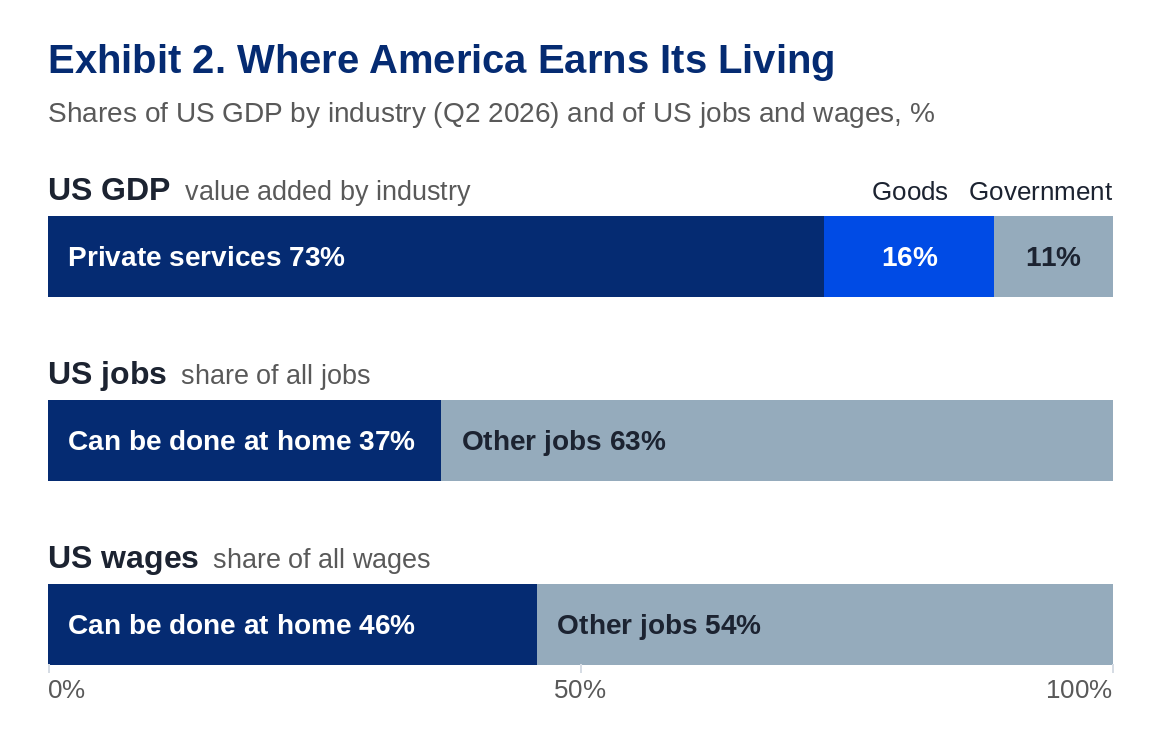
Exhibit 3 · Implications
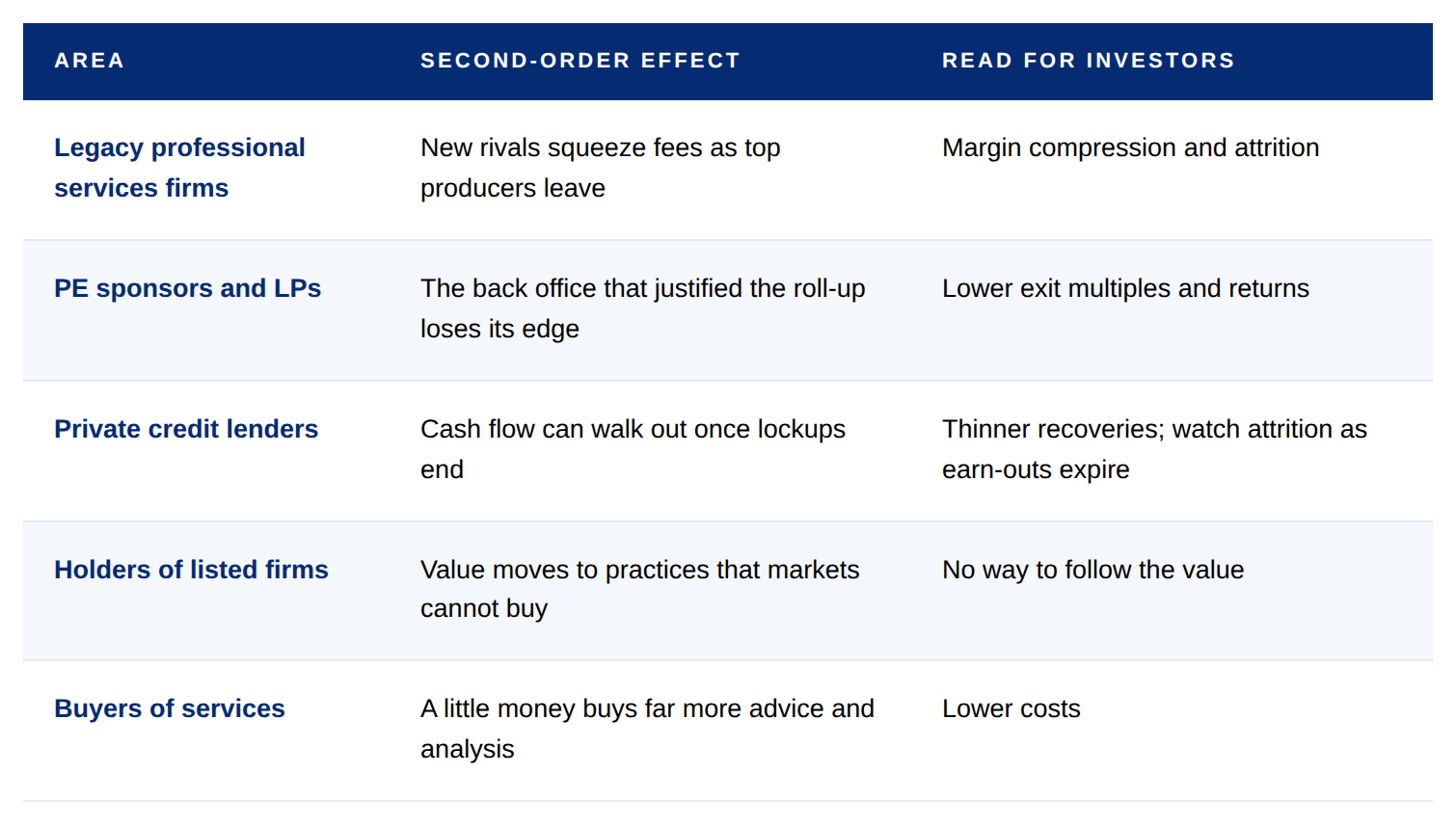
We expect these changes to roll through the economy over the next few years. A dose of humility is in order, because the end state is unclear. In one world even private practice makes little sense, because a model developer such as Anthropic takes over a whole market like audit. More likely, room remains for firms with real specialties. However because scaling becomes so easy with artificial intelligence, it's not clear that there will be many small practices.
Of course, money saved that would otherwise be spent on audit services can now be spent on other things. Thus, wealth is being created though it could cause some hiccups along the way particularly as it is redistributed.
The world is changing rapidly. This installment aims to provide a framework of possible major shifts for the benefit of sophisticated institutional investors and risk managers.