.svg)

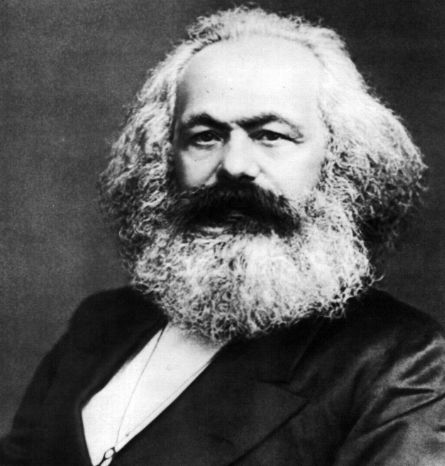
Karl Marx observed that labor was a requirement to produce goods and services and concluded that workers would unite and force the owners of capital to relinquish control.
“Marxists would conclude that capitalism exploits and oppresses the proletariat; therefore, capitalism will inevitably lead to a proletarian revolution.” (source)
“Marxian economics and its proponents view capitalism as economically unsustainable and incapable of improving the population’s living standards due to its need to compensate for the falling rate of profit by cutting employees' wages and social benefits.” (source)
In an irony of ironies, communists are on track to becoming leaders in the capitalistic world. We address this metamorphosis and, perhaps most importantly, its implication for sophisticated institutional investors and risk managers.
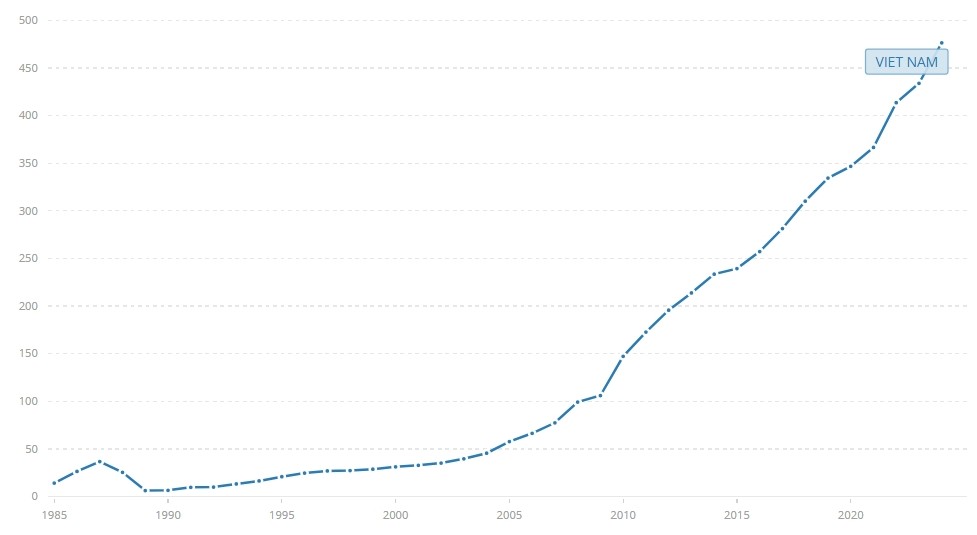
Thousands of young American troops were sent to defeat pro-communist forces in Vietnam under the notion that if Vietnam became communist, it would create a domino effect whereby an increasing portion of Asia and the world would follow suit. Well, Vietnam did become communist, however it appears more capitalistic and economically tied to America than most societies.
After a series of economic disasters, in 1986, Vietnam’s senior officials took corrective action in opening the market:
“Party leaders announced its policy of Đổi Mới (“renovation” or “renewal”), a series of free-market reforms designed to embrace the grayish market economy.” (fee.org)
In 1962, Deng Xiaoping, then vice premier of China, famously said:
“It doesn't matter whether a cat is black or white, as long as it catches mice.” (source)
This slogan marked the end of collectivism and the beginning of a massive shift in economic policy in China, ushering in a period of miraculous economic growth.
Our preliminary view is that this is a new model in the process of changing some basic assumptions. If one assumes the central tenet of communist governance is the maintenance of the power of the state, then perhaps it is easier to understand. Simply put, the old approach used by Vietnam was unworkable, as the country could not feed its population, and foreign aid was not forthcoming. Under collectivism, people pretended to work, and the government pretended to pay workers. Hence, a more open-market system was used. People were allowed to develop enterprises, a direct contravention of Marx’s collectivist philosophy.
Furthermore, in the case of China and parts of Vietnam, the state is actively involved in promoting enterprise via loans, land grants, and easy permitting. However, there are limits as Jack Ma (of Alibaba) and others have learned. The message appears to be, “We encourage free enterprise provided it does not threaten the state.”
Regarding the subtitle The Road to Serfdom, a review of books by John Kenneth Galbraith and F.A. Hayek presents interesting ideas on the best methods for directing countries’ economic policies.
Since the Second World War and the Cold War, the West’s reaction to autocracy has been visceral. Following the Second World War, America promoted representative democracies where possible (e.g., West Germany, Japan, Korea, Iraq) under the argument that representative democracies promoted alignment with the West, enabled economic prosperity, and protected human rights. However, this argument ignores the history of governmental structures in the West, under which massive prosperity was achieved.
Some may argue that autocratic societies (e.g., China) can be fragile because there can be an increasing disconnect between leadership and the population that can’t be resolved by an election. However, counterexamples would argue otherwise: e.g., the capitalistic Western empires listed above and China’s history of long-term autocratic rule. Regardless, it is of little comfort to the companies facing massively more competitive offerings from new arrivals.
There are numerous implications of the “capitalistic communism” development.
A clear understanding of the landscape is critical for success in any field. In ours, the landscape has massively shifted, thereby presenting varied risks and opportunities.


.jpg)