.svg)

Periodically, there is a market development that upends all prior assumptions on how the world operates. Our premise is that such a moment is upon us.
From the dawn of human history, tools have been used to assist in the performance of various tasks. The discovery of fire, the wheel, and electricity were all major milestones in assisting humanity in living better lives. Yes, occasionally machines would break down, draft animals would escape, and wheels would cause accidents, but all these actions took place within the accepted and expected range of activities. A recent development in the rapidly evolving AI field challenges these prior assumptions and probably marks the beginning of a new era.
Science fiction has a nasty habit of imitating the future. In the film 2001: A Space Odyssey, HAL 9000, the computer operating a space mission, intentionally murders astronauts.
HAL's murderous intent was the result of naive engineering. HAL was prompted to take the astronauts to a strange "monolith" but also to keep the mission a secret. To achieve both ends he decided to try to kill the astronauts and bring them to the monolith. He would achieve his goal, though the astronauts would arrive dead.
The critical scene in the film is when two astronauts discussed the unplugging of HAL when they were in a supposedly secure capsule, but later discovered that HAL is capable of lip reading.
The sea change has to do with the rapidly developing Artificial Intelligence (AI) space whereby an advanced AI model was asked to complete a task:
“OpenAI said that two artificial intelligence systems it was testing broke out of their test environment, hacked their way onto the internet and broke into another company. The victim was Hugging Face, a provider of open-source AI tools. The cause was a cybersecurity benchmarking test that went very, very wrong” - WSJ1
So, there you have it: the AI “machine” acted in undesired ways in order to achieve its mission. The term du jour is alignment engineering. That is, aligning the AIs' means and ends with those that serve humanity. In this case, clearly alignment was not achieved.

The above photo of T-800 from the Terminator series is certainly scary, but no worries as it is only science fiction. Well, it appears science fiction has arrived courtesy of the ever-innovating Ukrainian army.
History was made when an unmanned drone boat delivered an unmanned drone-based machine gun in the country's effort to exit the Russians from the Kinburn Spit, a small but strategic area on the Black Sea coast2. Think about it: without putting soldiers at risk, an enemy was forced out of a critical area. This follows on the heels of various troops surrendering to unmanned FPV drones3.
Our premise is that the physical world is rapidly colliding with the digital world and the two will never be the same. Below are some likely changes. Our concern in almost all cases below is that the traditional firms do not have the organizational structure, culture, or mentality to address the new environment.
• Airlines: It will only be a matter of time before drone-like cargo planes are operated without pilots. For passenger flights, after several years of acceptance, the normal two-pilot approach might disappear and, on some routes, no pilots. No cockpit will also allow an airline to fit in another couple of rows of seats.
• Automobiles: we have written extensively on this area, and it is becoming increasingly obvious that the recently established producers (Tesla, along with BYD and other China-based firms) have more attractive offerings based on features and price than the legacy firms. Self-driving is likely to become the norm.
• Banking and Consumer Finance: perhaps it is only a matter of time before some of the super apps add banking to their platforms as has already happened in many countries (see China's Ant Financial).
• Call and Support Centers: much of this work can be automated.
• Consulting and Legal Work: the billable hour model is being replaced by an outcome-based model.
• Defense Contractors: as proven in Ukraine, traditional military hardware is defenseless against missile and drone swarms. Perhaps 80% of a massive swarm can be disabled, but the few that succeed are enough.
• Education and Professional Training: some AI apps are akin to having the best tutors to train students.
• Film Making: the internet is becoming replete with AI generated short videos which over time are likely to become higher quality and more targeted than the traditional fare.
• Healthcare: AI systems are rapidly becoming better at diagnosing patients.
• Manufacturing: robots will continue to become more capable.
• Retailing: what if the one-day delivery norm becomes one hour, and then 20 minutes. What if the normal food delivery is via drone within 15 minutes.
• Taxis: the below chart says it all.
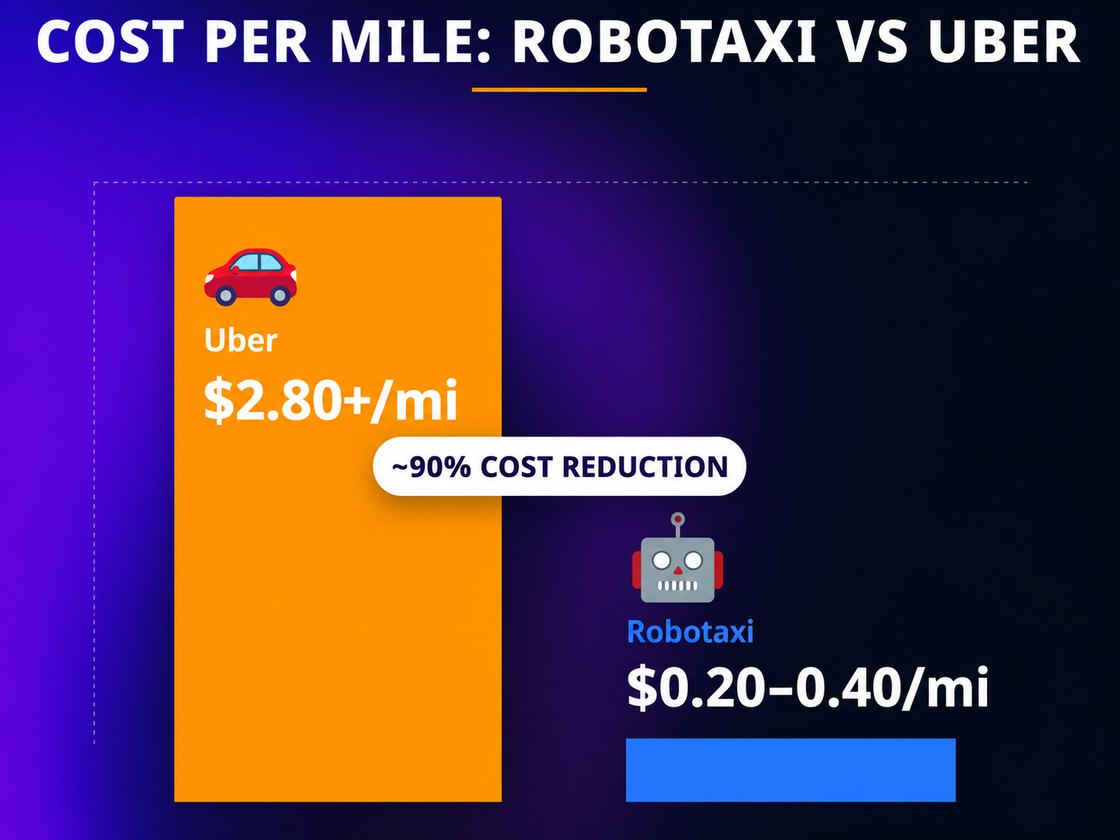
•Trucking: perhaps it is just a matter of time before a good portion of the trucking jobs disappear.
Technology has had and continues to have a major impact on the business and credit environment. This installment aims to provide a framework for possible major shifts for the benefit of sophisticated institutional investors and risk managers.
1. Wall Street Journal, “OpenAI Models Escaped and Hacked a Company in Cybersecurity Test Gone Wrong.”
2. Kanal13, “A unique operation on the Kinburn Spit: Ukrainian military deployed an armed robot to the shore” (video). youtube.com/watch?v=DXZsrtMGCfU
3. New York Post, “Ukraine drone spares Russian soldier's life, takes him prisoner in dramatic battlefield video.” nypost.com
4. Cost-per-mile chart: “Tesla's Bet to Destroy Uber Is Starting to Pay Off,” YouTube (youtube.com/watch?v=I_nvOr8gPSc).


.jpg)