.svg)
While many are congratulating military leaders on the supposedly low-risk/high-reward strategy of intermittently closing the Strait of Hormuz, there is another, far more dangerous interpretation. Without doubt, the Iran War is having a major effect on the markets and therefore is relevant to most sophisticated institutional investors and risk managers. While we are obviously not certain of the outcome of the Iran War, with this installment we aim to provide an alternative view to the current prevailing consensus.
The hope is that the deprivation of income will compel Iran to accept terms provided by the US, which for the most part include a cessation of the enrichment programs, a surrendering of the enriched uranium, an opening of the Strait of Hormuz, and a cessation of arming Iranian allies in the region. While this assumption is probably the most likely outcome, there is another view, and that is the case of Japan in the early 1940s.
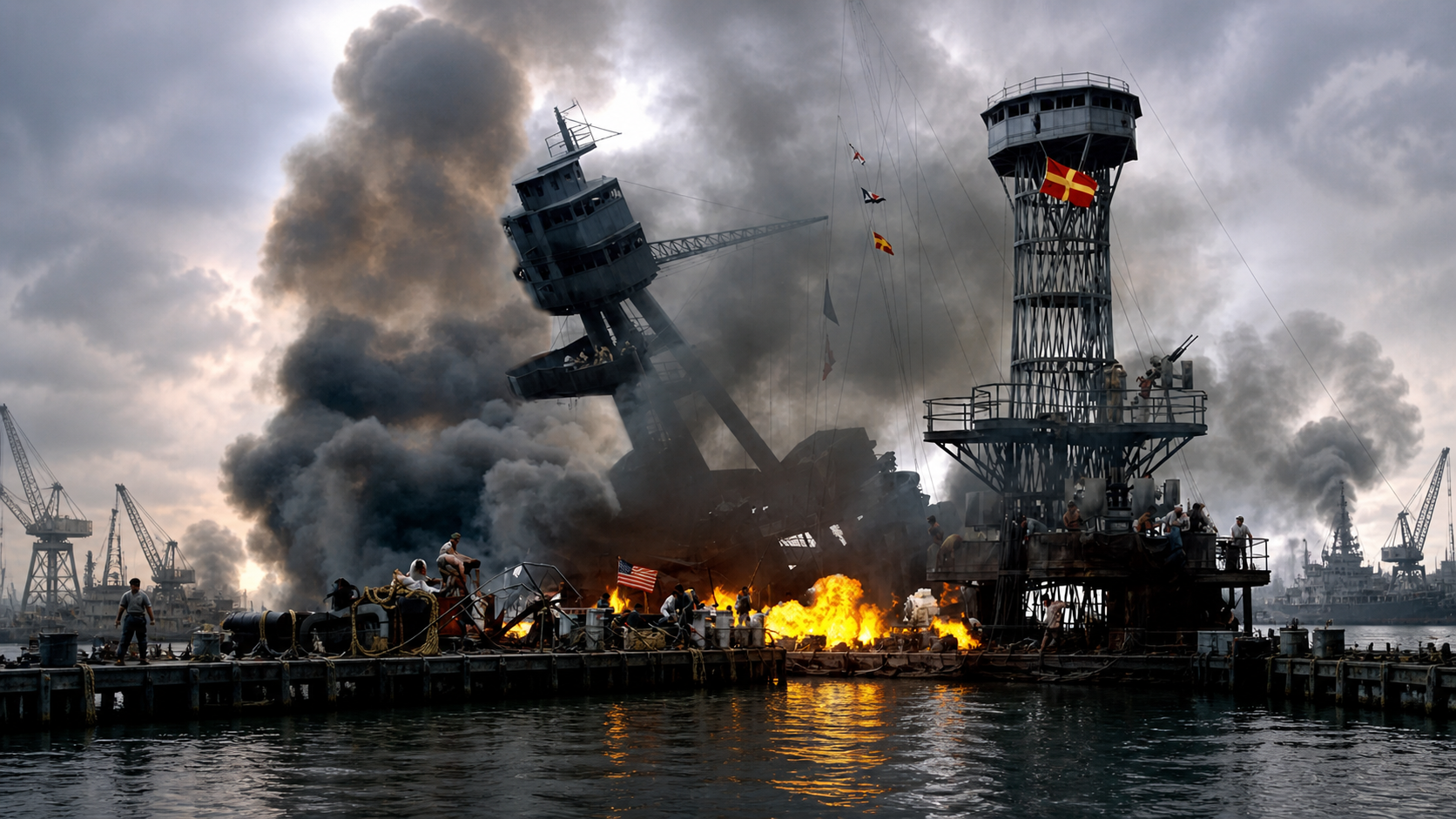
With Japan’s attacks on China and Manchuria, the United States curtailed shipments of petroleum to Japan, thereby placing the country in a highly vulnerable position. The country was given the choice of withdrawing from both areas or losing access to petroleum. Feeling cornered, Japan chose the option of attacking the US, hoping to secure petroleum from the Dutch West Indies. Since the Philippines and other US bases were on its supply lines, the thought was to hit the US hard and hope for some kind of palatable resolution.
Perhaps similar logic is at play currently in Iran. Iran has little hope of beating its foes in a conventional battle, but perhaps it can inflict sufficient pain to extract a more palatable peace. Perhaps the current thinking is that one major shocking blow will sufficiently alter public perceptions that the US and Israel would be willing to settle for far more favorable terms.
A few factors worth considering are:
Conversely, the factor in the current equation which did not exist six months ago is that if the negotiations fail, both the US and Israel are likely to impose significant costs on Iran in the form of destroying bridges, power generation facilities, and other dual-use infrastructure. While there is little doubt that Iran can strike back, the response to such strikes is likely to be swift and painful.
Typically, the best way to predict another’s actions is to use their value system and match the potential action with the framework of their values. In the case of the IRGC, who now basically control Iran, they are presumably maintaining their power, although apparently the dysfunctional dynamic is that any leader appearing to be willing to negotiate is attacked by the hardliners. Ironically, the same dynamic took place in Japan in the 1930s whereby any faction of the government which appeared to be conciliatory to the West was either removed or assassinated by the increasingly militaristic government.
We remain hopeful that a solution will be ironed out but are watchful for other possibilities. Perhaps, that is the best approach for sophisticated institutional investors and risk managers.


.jpg)