A Genius Solution
September 16, 2026
Overview
In a manner reminiscent of the discredited MMT (Modern Monetary Theory), French politicians are suggesting an ingenious (but deeply flawed) solution to their growing debt concerns.¹ For the benefit of sophisticated Institutional Investors and Risk Managers we discuss how we arrived at this point and more importantly, likely outcomes.
I. A Forgotten History
For centuries, France was THE continental power of Europe while the Dutch and later England dominated the sea lanes. Via this wealth and power, France built some of the most beautiful palaces of the world and became the envy of much of the developed world. However, quickly forgotten is the fact that all that gold masked some underlying problems which resurfaced on a periodic basis. Long forgotten is the fact that France defaulted a total of nine times, many times because of questionable wars, lavish spending, and misguided policies.²
II. Repeating History
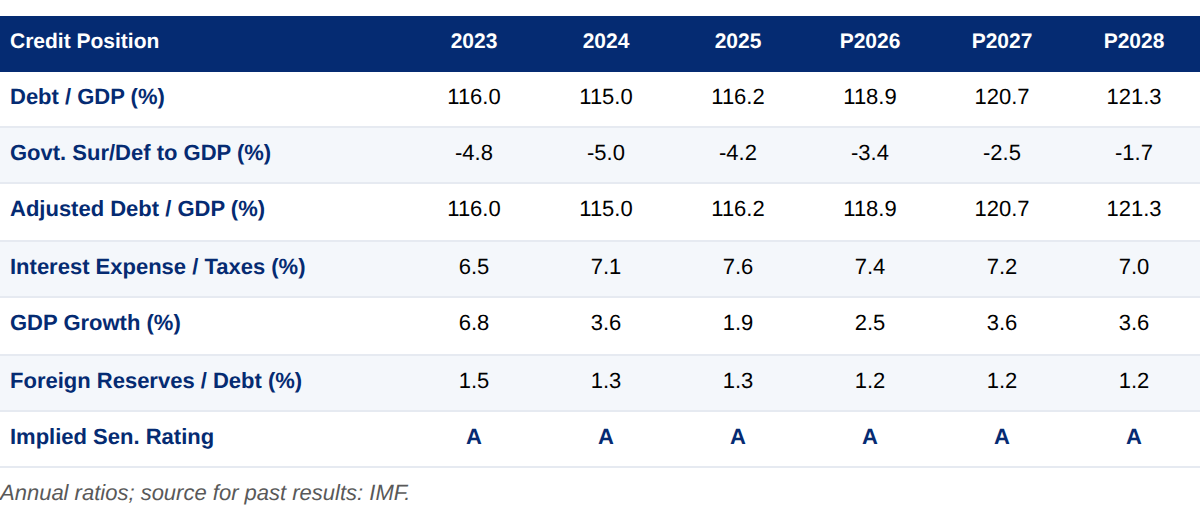
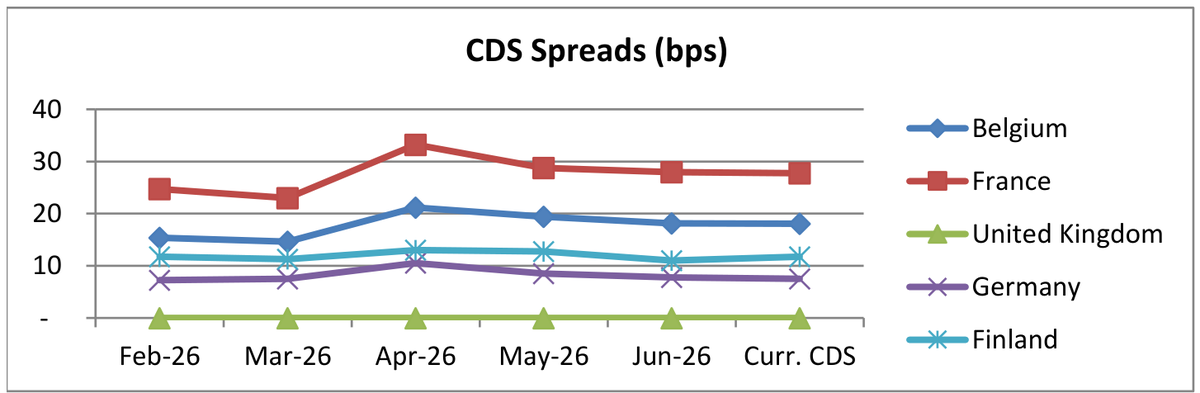
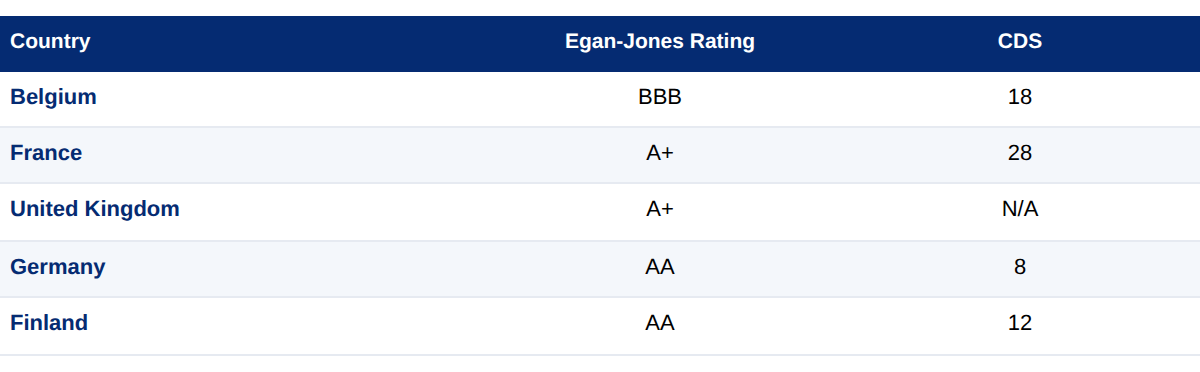
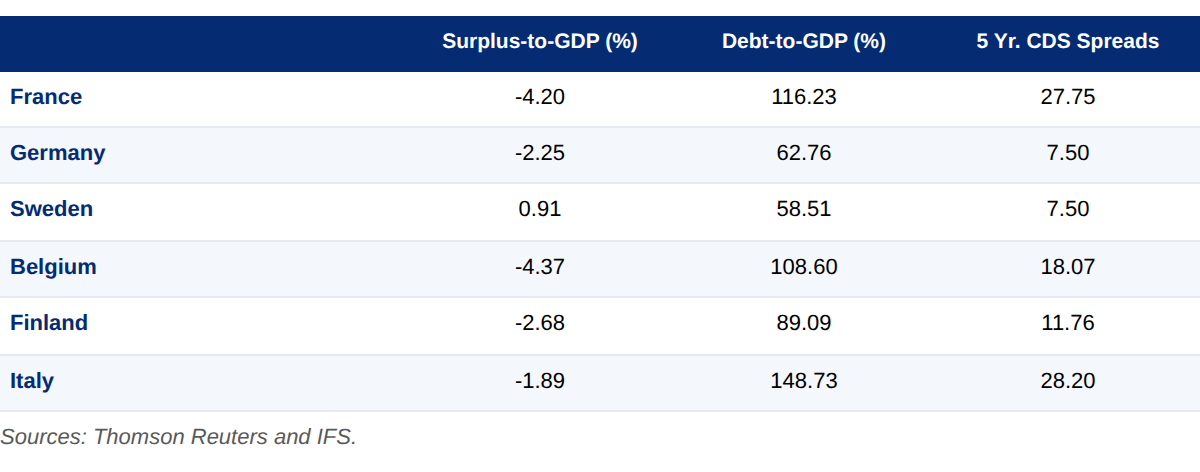
For better or worse, France is yet again in peril as indicated by the typical measures: a rising debt to GDP, gapping out debt yields, and a stubborn level of deficits.³ (Egan-Jones’ current rating analysis of the French Republic is reproduced in full below.) Compounding the troubles are a declining birth rate, rising dependency levels and calls for increased military spending to respond to (A) heightened tension with Russia, (B) heightened pressure from the US to increase spending and (C) skepticism over its military relationship with America.
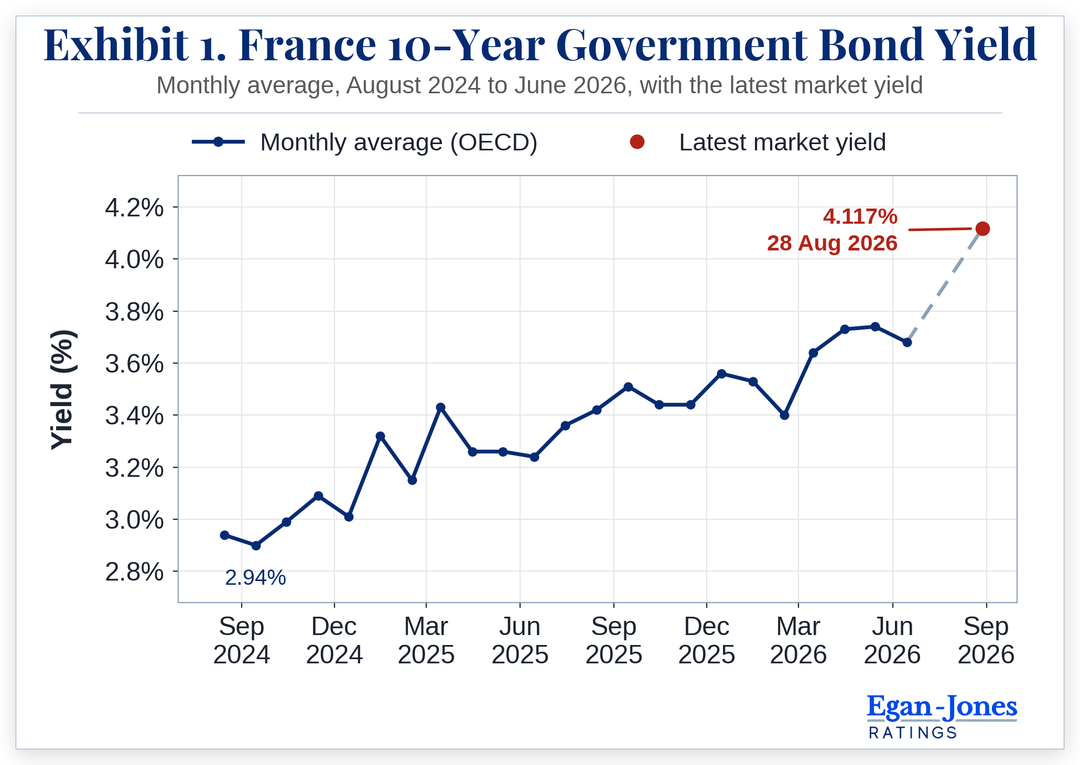 Sources: OECD Main Economic Indicators via FRED, series IRLTLT01FRM156N (monthly averages through June 2026); Trading Economics (28 August 2026 market yield).
The dashed segment bridges the publication lag between the last OECD monthly average and the latest market quote. The August 2026 point is a point-in-time observation, not a monthly average.
III. Possible Solutions
Now for the interesting part and that is possible solutions. The normal alternatives are listed below and comments on each:
- Increase revenues (i.e., taxes) - while possible in theory, France is one of the more heavily taxed nations (second-highest in the OECD)⁴, and a tax increase might reduce revenues rather than increase them. An economic boom from AI is far from certain. - Reduce spending - given the aging population, the increased dependency ratio, and the threat of riots, which occurred when the last major cut in social spending was suggested (it toppled a government)⁵, this path is a bit treacherous for the typical politician. - Issue currency - this has become the solution du jour post the 2008 credit crisis whereby governments flood the economy with money whenever there is any significant disruption. The problem for France is that it is part of the euro monetary system and therefore issuing additional currency is easier said than done.
IV. Some Empirical Evidence
Given the fact that France is on the verge of a major election with a left-of-center and a right-of-center populist party (led by Jean-Luc Mélenchon, and Marine Le Pen respectively), perhaps it is worthwhile examining their platforms for a hint of what’s to come. If we are to believe the politicians (always a dicey undertaking) then it appears that Mr. Mélenchon is taking the matter seriously and is proposing a solution. (Hint: we like the first part but hate the second). The proposal might be considered genius by some and borderline fraud by others.
V. The Ingenious Idea
In a plan that might have been inspired by that late great magician, a true master of misdirection Mr. Harry Houdini, Mr. Mélenchon is proposing that the central bank simply cancel the bonds it holds that were issued under eurozone-wide quantitative easing. Simple, just cancel the debt, no pains, no worries, no default. Vanished! With a stroke of a pen, billions of euros of indebtedness vanish.
VI. The Fallout
For those feeling befuddled, join the crowd. This sleight of hand has a cost, but it takes a bit of thought to determine where and how. First off, the bank has seen a major asset disappear from its balance sheet and the liabilities (in the form of currency issued) remains. Hence, it is akin to Germany’s printing of increasing amounts of currency during the Weimar Republic. Second, the European Central Bank (ECB), might have concerns about its currency being debauched. (The proposal would give France immediate relief from refinancing and interest costs, but it faces a decisive obstacle: the ECB considers it prohibited monetary financing under Article 123 of the EU treaty.⁶) Lastly, funding costs for the country might increase based on concerns about the chicanery and that might be continued thereby offsetting any gains.
VII. More Likely
Unfortunately, France is not alone; the debt to GDP has risen for many of the developed countries. Our sense is that governments often do not take such drastic actions unless they are forced to and perhaps the increased yields (see the “bond vigilantes” of yesteryear) or problems funding the various programs will be the catalyst. In the meantime, watch for a muddling through and central banks standing ready to suppress long-term yields via quantitative easing.
VIII. Difficult Lot of the Central Banker
The Credit Crisis of 2008 was a watershed event which saw the Treasury Secretary asking for a “bazooka” in the form of 17 unprecedented programs to assist in bucking up the precarious financial system (people forget that the US had to backstop the commercial paper market because a major issuer could not roll its paper).⁷ Coupled with that power was Bernanke’s claim that the Great Depression was caused by the government failing to step in early in force to replace the private sector demand which had exited the market. While there is little doubt that those expansive powers granted the Central banks post the crisis were critical, the concerns remain whether those same powers will delay the adjustments needed for a more sustainable path.
IX. Staying Focused / Conclusion
Our North Star has been and remains assisting sophisticated institutional investors and risk managers. With that, we believe the most likely course is the usage of QE supplemented with IMF SDRs (Special Drawing Rights) or similar tools in the short and medium term to address sovereign credit quality concerns.
French Republic
Rating Analysis | 8/13/26

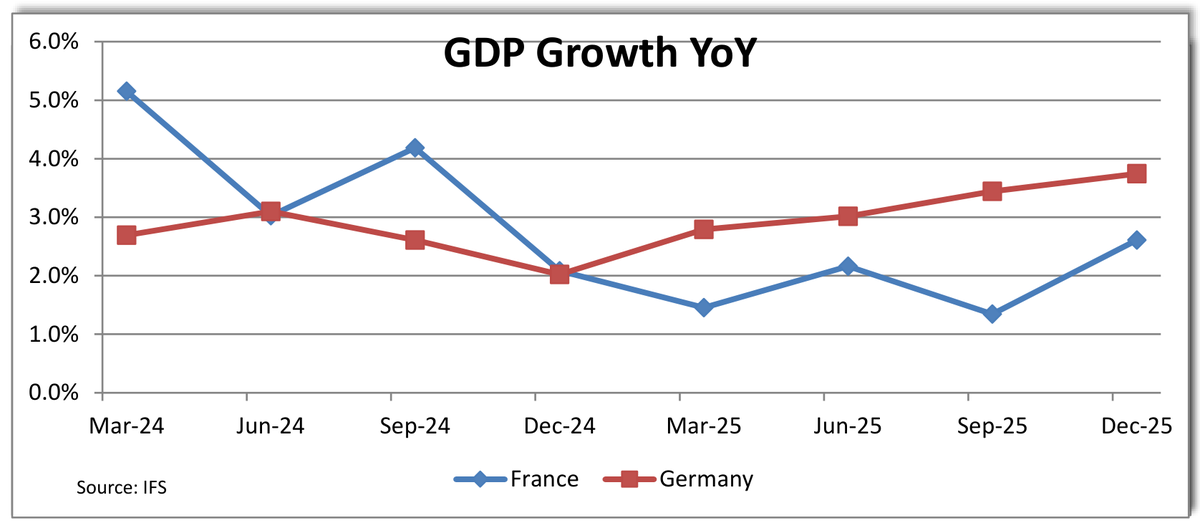
France’s economy is expected to slow further in 2025 before gradually recovering in 2026. After growing at 1.1% in 2023-24, GDP growth is set to decline to 0.6% in 2025 due to heightened economic policy uncertainty, before picking up to 0.9% in 2026.
Private consumption will become the main engine of growth in 2025, as exports suffer from increased trade tensions and investment is held back by uncertainty. The recovery in 2026 will be supported by stronger investment and steady consumer spending. Inflation is expected to fall to 1.2% in 2025, driven by cuts in electricity tariffs, before edging up to 1.7% in 2026. However, there is a significant risk of fiscal slippage given the large fiscal effort required, and weaker-than-expected growth or rising defense spending could make it harder to meet targets. Public debt is projected to remain high at nearly 120% of GDP in 2026. Stabilization will require continued deficit reduction and growth-enhancing reforms, including prioritizing digital uptake, simplifying regulations in the services sector, and better targeting innovation support towards SMEs. Affirming.
Economic Growth
Solid growth in private consumption, fueled by rising real disposable incomes, is expected to be the primary engine of economic expansion in France in 2025. Real wages in France have almost caught up with their early 2021 levels, being only 1% lower in Q1 2025 than in Q1 2021, thanks to relatively contained inflation and dynamic wage re-negotiations. However, real wage growth remains weak at 0.7% annually, below the OECD average of 2.5%. While persistent uncertainty surrounding trade policy is likely to restrain investment growth in 2025, increased absorption of EU funds and reduced trade policy uncertainty after summer 2025 are projected to drive a rebound in 2026. Export performance will remain muted, as heightened trade restrictions, especially in key sectors, continue to pose challenges.
Fiscal Policy
France’s fiscal position in 2025 reflects a commitment to fiscal discipline alongside targeted investment, though significant challenges remain. The general government deficit is projected to remain at 5.4% of GDP in 2025 and decline to 5.0% in 2026, from 5.8% in 2024, though this remains well above the EU’s Stability and Growth Pact threshold of 3%. The government aims to cut the budget deficit to 5.0% in 2026 as part of a broader plan to bring it back into line with the EU’s 3% ceiling by 2029.
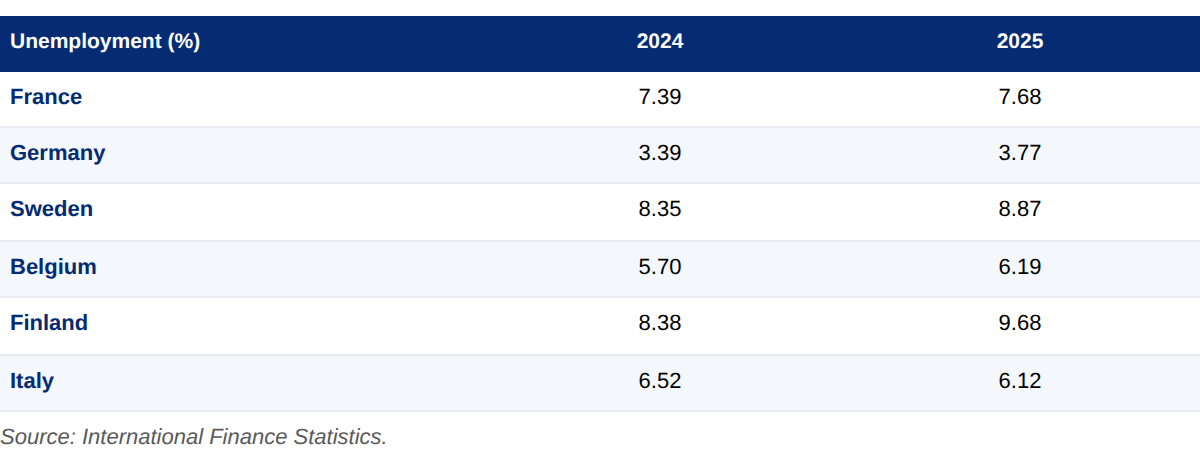
Unemployment
France’s unemployment rate remained stable at around 7.3-7.4% over the past year until April-May 2025, when it declined to 7.1%. This remains at a historically low level but is still 2.2 percentage points above the OECD unemployment rate of 4.9%. According to OECD projections, the unemployment rate is expected to rise to 7.8% by the end of 2025, then fall back to 7.4% by the end of 2026. The labor market cooled in 2025, with the unemployment rate rising to 7.9% in Q4 2025, a 0.6 percentage-point increase over the year.
Banking Sector
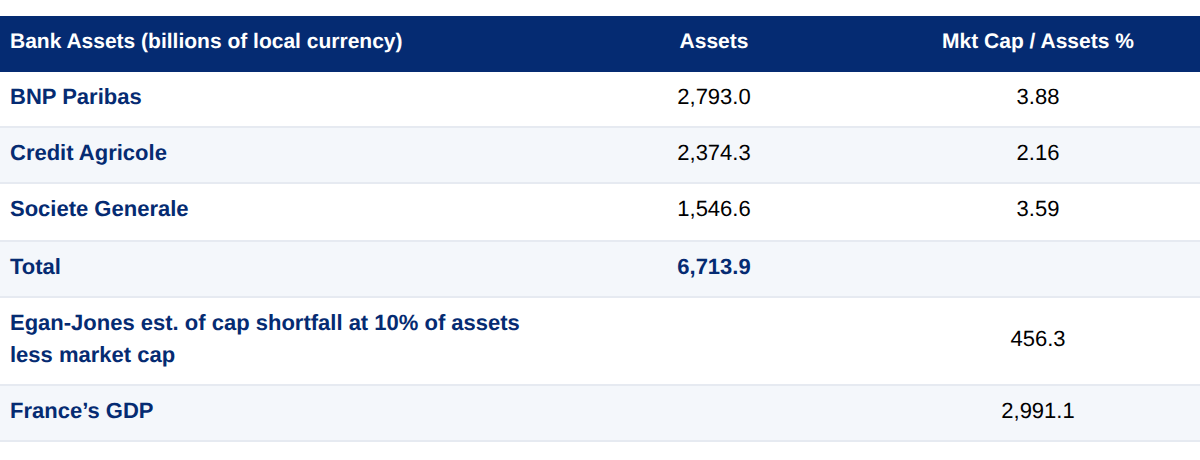
The French banking sector in 2025 is characterized by robust fundamentals, high levels of own funds and liquidity, and improving profitability. French banks benefit from solvency and liquidity ratios that remain well above regulatory thresholds, and, according to bank stress tests conducted in 2025, these capital buffers would enable them to absorb a severe macroeconomic shock.
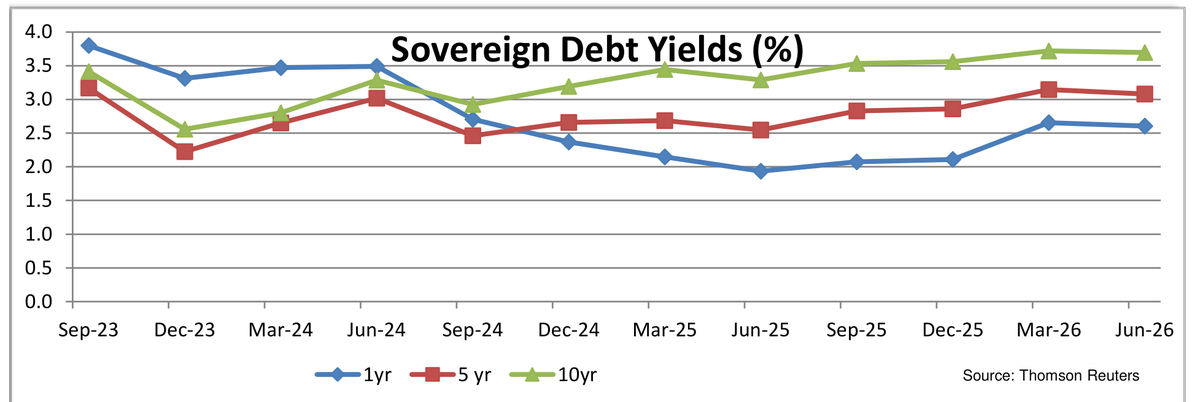
Funding Costs
The European Central Bank (ECB), which sets monetary policy for France as part of the euro area, kept its key interest rates unchanged between June and December 2025, with the deposit facility rate at 2.00%, the main refinancing rate at 2.15%, and the marginal lending facility at 2.40%. In France, both the sovereign interest rate and bank lending rate for corporations reached about 3.4% in August 2025. The composite cost-of-borrowing indicator, which combines interest rates across all corporate loans, increased in December 2025.
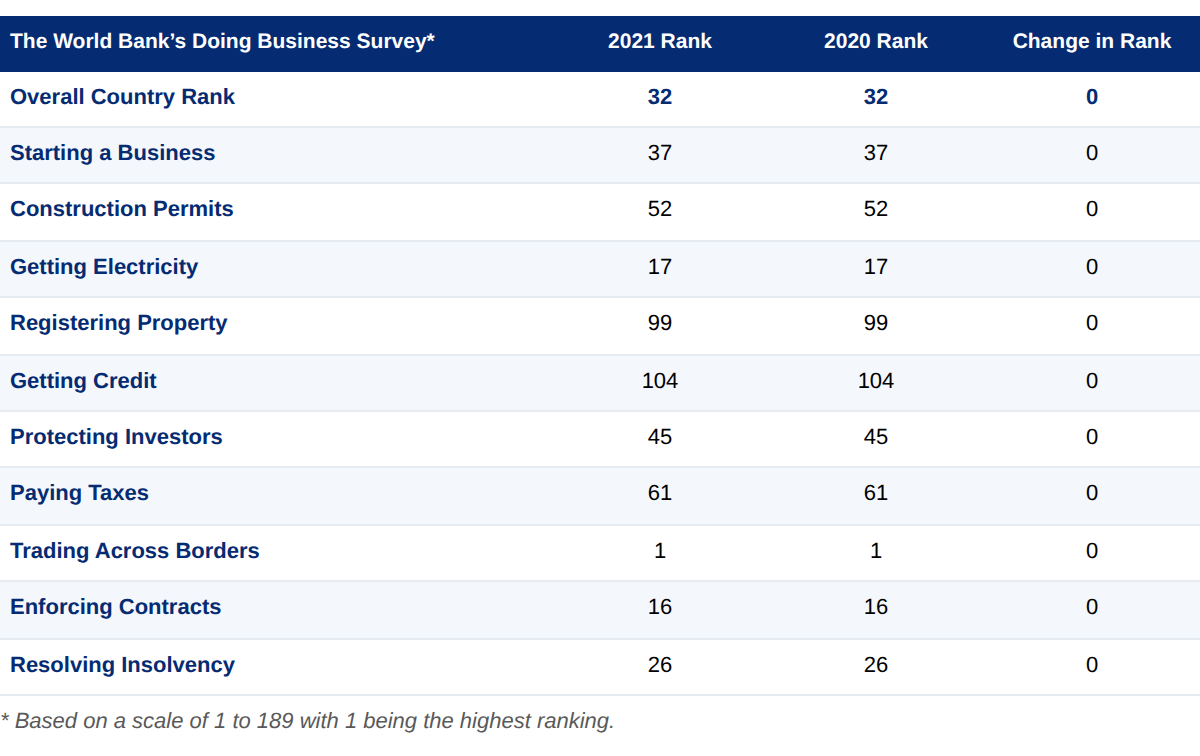
Ease of Doing Business
Major factors for growing the economy are the ease of doing business and the economic freedom; although not the sole factor for determining economic growth, a country which makes it easy for businesses to operate and provides a reasonably free environment to conduct business has a good chance for growth. The table below indicates that with an overall rank of 32 (1 is best, 189 worst) France is above average.
Economic Freedom
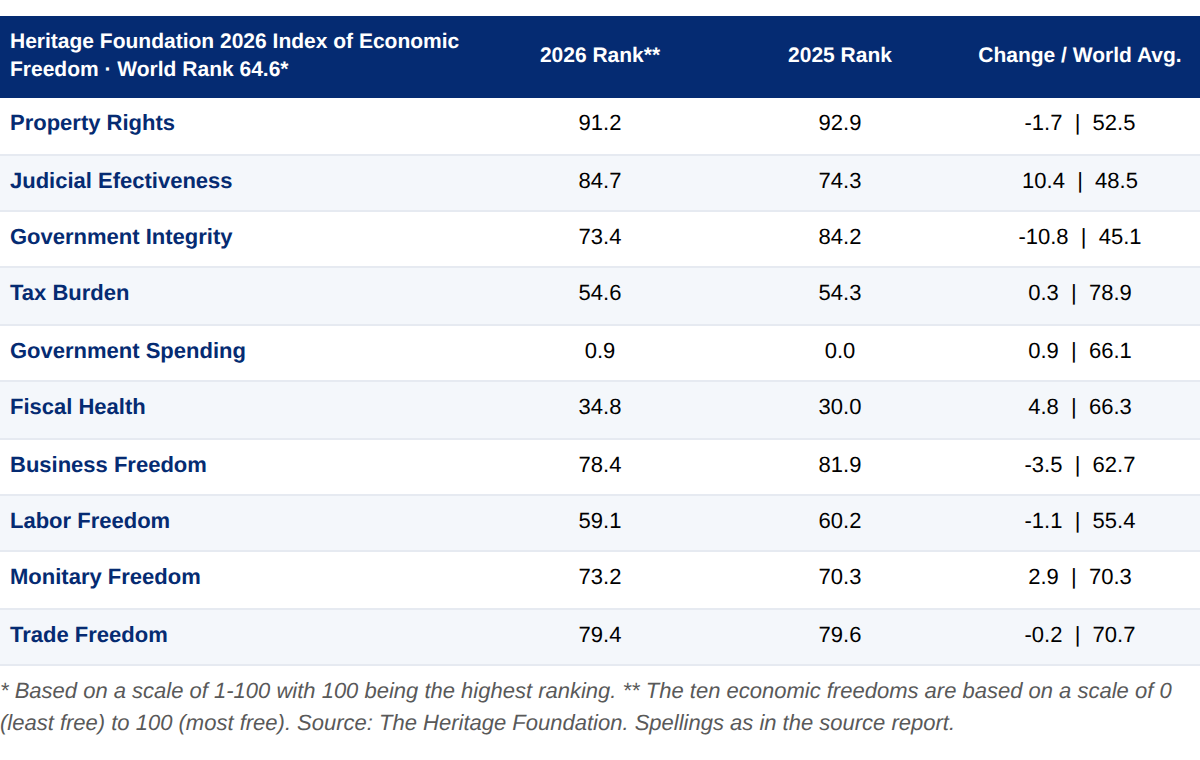
As can be seen below, France is above average in its overall rank of 64.6 for Economic Freedom with 100 being best.
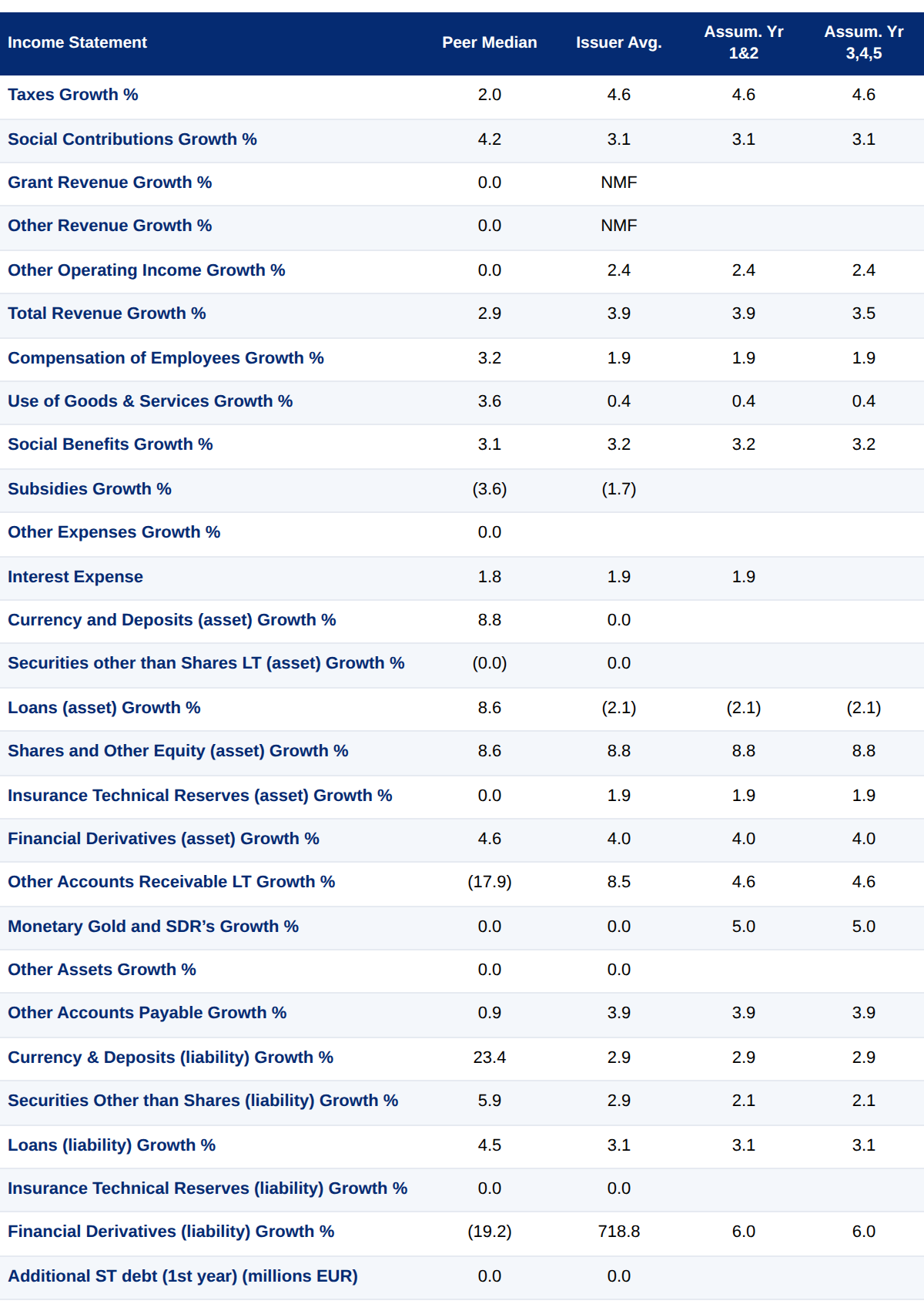
Credit Quality Driver: Taxes Growth
FRENCH REPUBLIC has grown its taxes of 4.6% per annum in the last fiscal year which is more than the average for its peers. We expect tax revenues will grow approximately 4.6% per annum over the next couple of years and 4.6% per annum for the next couple of years thereafter.
Credit Quality Driver: Total Revenue Growth
FRENCH REPUBLIC’s total revenue growth has been more than its peers and we assumed no growth in total revenue over the next two years.
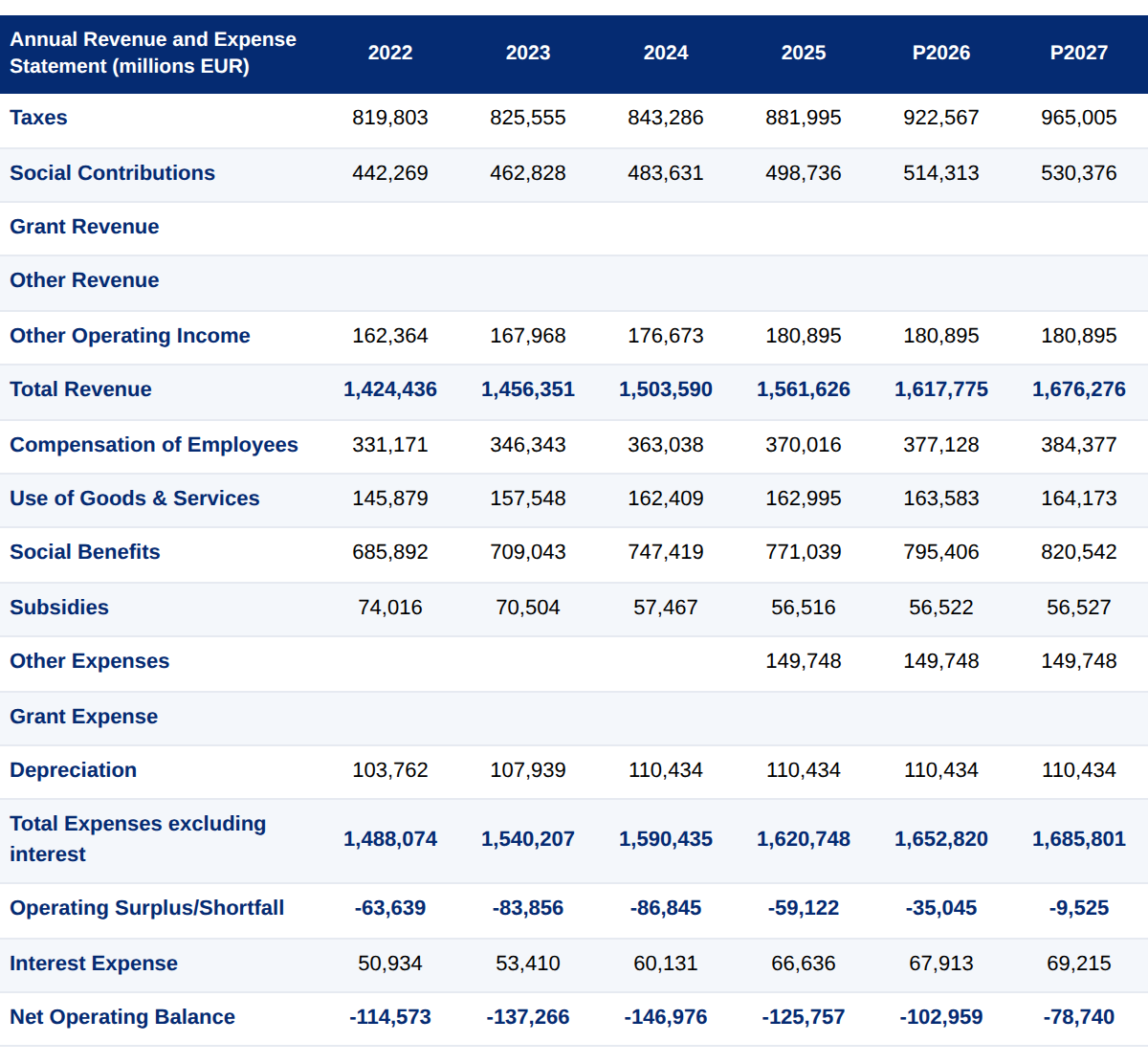
Annual Income Statements
Below are FRENCH REPUBLIC’s annual income statements with the projected years based on the assumptions listed in the credit quality driver section.
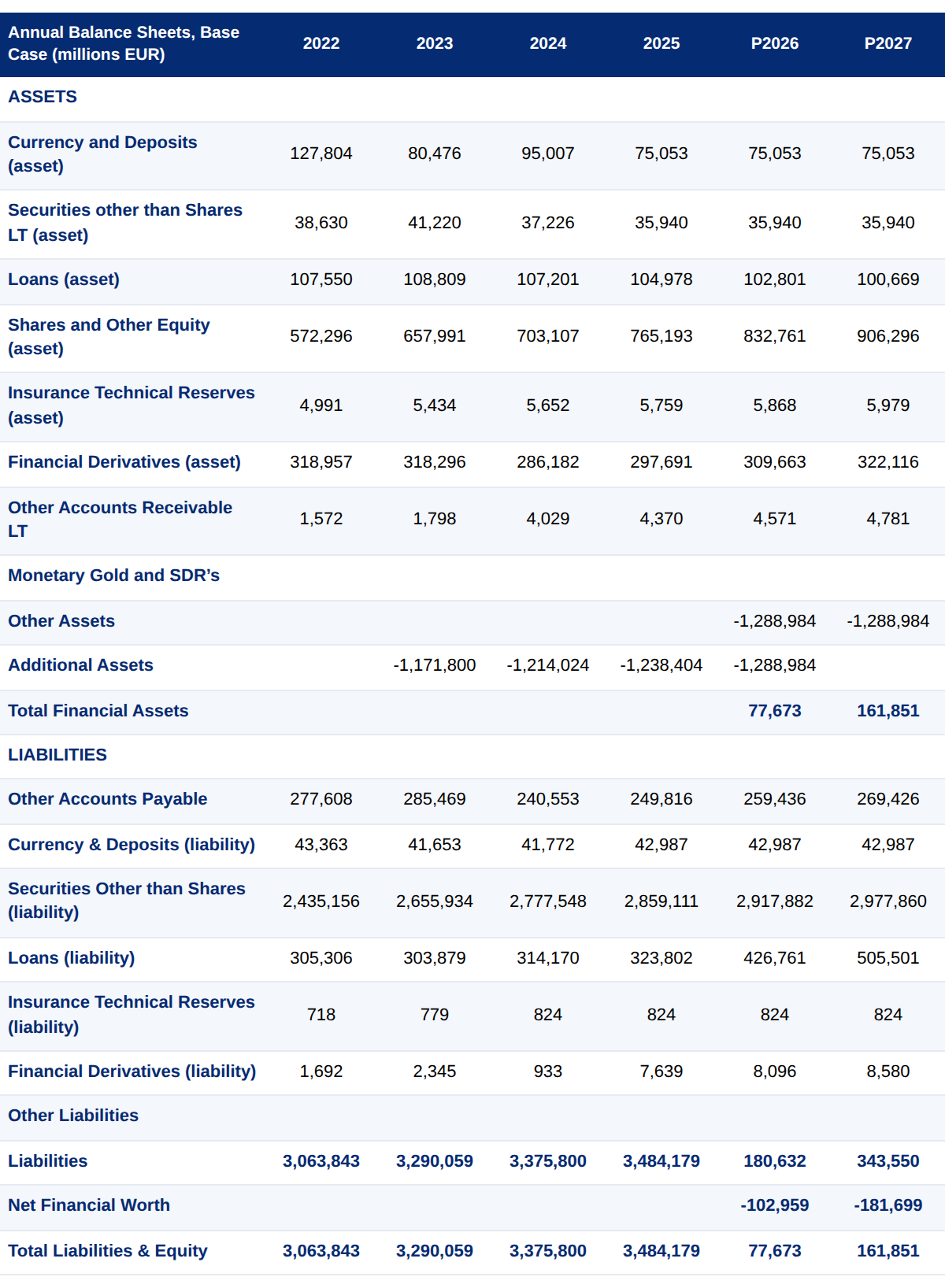
Annual Balance Sheets
Below are FRENCH REPUBLIC’s balance sheets with the projected years based on the assumptions listed in the credit quality driver section.
Comments on the Difference between the Model and Assigned Rating
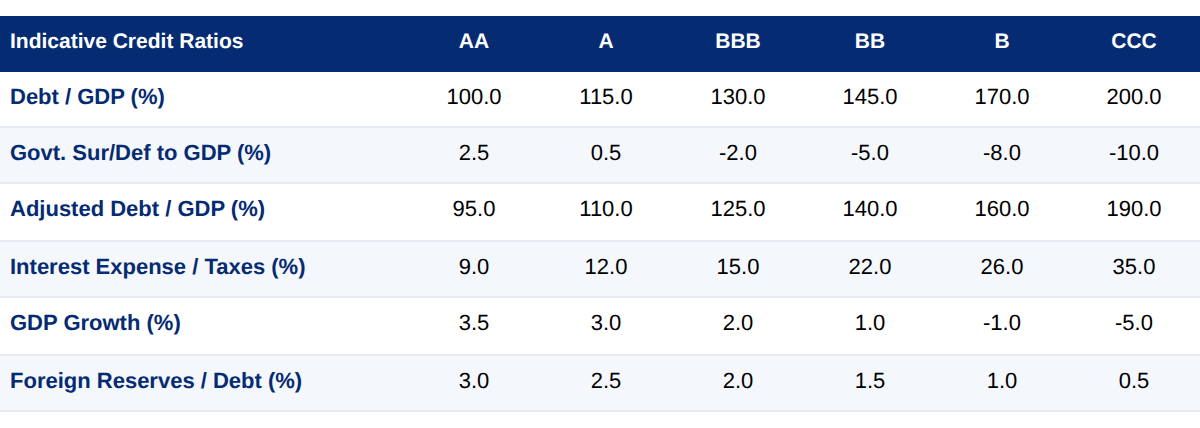
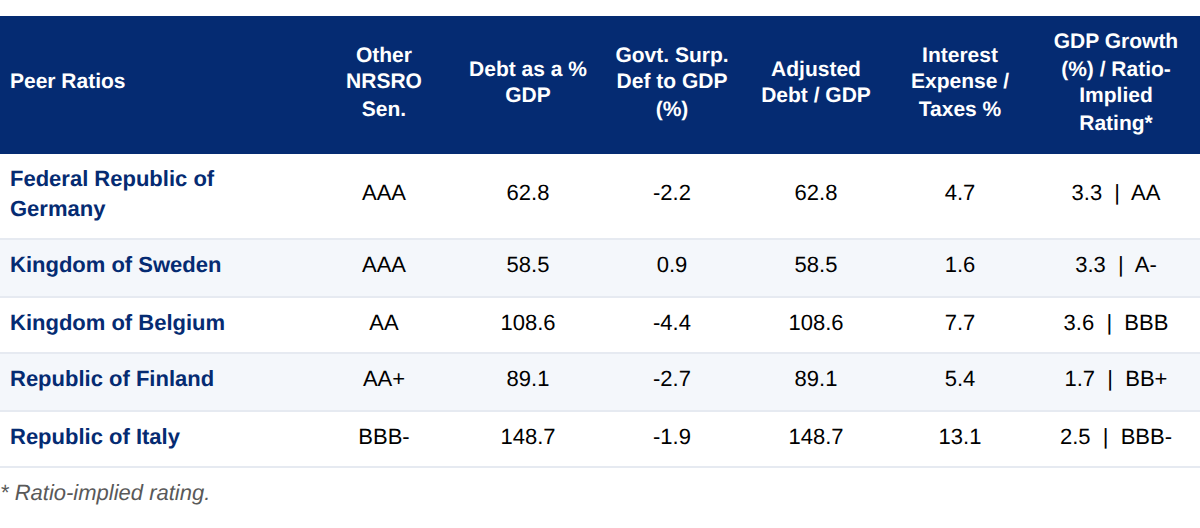
In this case, there has been little change in the recent results and therefore we have used our best judgement in making adjustments which are reflected in the results for the projected ratings. We have assigned a rating of “A+” whereas the ratio-implied rating for the most recent period is “A”; the median rating for the peers is significantly higher than the issuer’s rating.
Changes in Indicative Ratios
We have not made any adjustment in the indicative ratios at this time.
SEC Rule 17g-7(a) Disclosure
Below are the disclosures as required by Paragraph (a) of Rule 17g-7.
1. The symbol in the rating scale used to denote the credit rating categories and notches within categories and the identity of the obligor, security, or money market instrument as required by Paragraph (a)(1)(ii)(A) of Rule 17g-7:
For the issuer FRENCH REPUBLIC with the ticker of 223727Z FP we have assigned the senior unsecured rating of A+. There are three notches in our rating categories (e.g., A-, A, and A+) other than those deep into speculative grade; for CC, C, and D there are no notches.
2. The version of the procedure or methodology used to determine the credit rating as required by Paragraph (a)(1)(ii)(B) of Rule 17g-7:
We are using the methodology version #16 available via egan-jones.com under the tab at the bottom of the page “Methodologies”.
3. The main assumptions and principles used in constructing the procedures and methodologies used to determine the credit rating as required by Paragraph (a)(1)(ii)(C) of Rule 17g-7:
The credit rating assigned reflects our judgement regarding the future credit quality of the issuer. Regarding the specific assumptions used, please refer to the credit quality driver section of this Rating Analysis Report.
4. The potential limitations of the credit rating as required by Paragraph (a)(1)(ii)(D) of Rule 17g-7:
Our rating pertains solely to our view of current and prospective credit quality. Our rating does not address pricing, liquidity, or other risks associated with holding investments in the issuer.
5. Information on the uncertainty of the credit rating as required by Paragraph (a)(1)(ii)(E) of Rule 17g-7:
Our rating is dependant on numerous factors including the reliability, accuracy, and quality of the data relied used in determining the credit rating. The data is sourced from publicly-available 10Q and 10K statements, quarterly reports, 8K filings, earnings reports, and other similar sources. In some cases, the information is limited because of issues such as short operating histories, the lack of reported data, a delay in reporting data, restatements, inaccurate accounting, and other issues. Such shortcomings are not always readily apparent. Egan-Jones aims to identify such shortcomings and make adjustments using its best judgement.
6. Whether and to what extent third-party due diligence services have been used in taking the rating action as required by Paragraph (a)(1)(ii)(F) of Rule 17g-7:
Egan-Jones does not utilize third-party due diligence services.
7. How servicer or remittance reports were used, and with what frequency, to conduct surveillance of the credit rating as required by Paragraph (a)(1)(ii)(G) of Rule 17g-7:
Servicer or remittance reports normally pertain to structured finance issuers; this report does not pertain to a structured finance issuer (Egan-Jones is not an NRSRO for structured finance or sovereigns / municipal issuers). Regarding surveillance, the minimum time period for corporation issuers is normally one year.
8. A description of the data that were relied upon for the purpose of determining the credit rating as required by Paragraph (a)(1)(ii)(H) of Rule 17g-7:
Egan-Jones uses 10Q and 10K statements, quarterly reports, 8K filings, earnings reports, governmental filings and other similar sources for ratings on publicly-traded issuers. In the case of private issuers, Egan-Jones relies on information provided mainly by issuers.
9. A statement containing an overall assessment of the quality of information available and considered in the credit rating as required by Paragraph (a)(1)(ii)(I) of Rule 17g-7:
The information is generally high quality and readily avail.
10. Information relating to conflicts of interest as required by Paragraph (a)(1)(ii)(J) of Rule 17g-7:
This rating is unsolicited.
11. An explanation or measure of the potential volatility of the credit rating as required by Paragraph (a)(1)(ii)(K) of Rule 17g-7:
Our rating aims to assess the probability of the payment of obligations in full and on-time. Factors which affect such probability, and in turn our rating, include changes in the operating performance of the issuer, changes in capital structure, and merger and acquisition events.
12. Information on the content of the credit rating as required by Paragraph (a)(1)(ii)(L) of Rule 17g-7:
Regarding the historical performance of the credit rating, our rating transition matrix is available in our Form NRSRO, exhibit 1. The expected probability of default and the expected loss in the event of default is listed on the first page of this report.
13. Information on the sensitivity of the credit rating to assumptions as required by Paragraph (a)(1)(ii)(M) of Rule 17g-7:
Below is a summary of the impact of the 5 assumptions which independently would have the greatest impact on our “ratio-implied rating”:
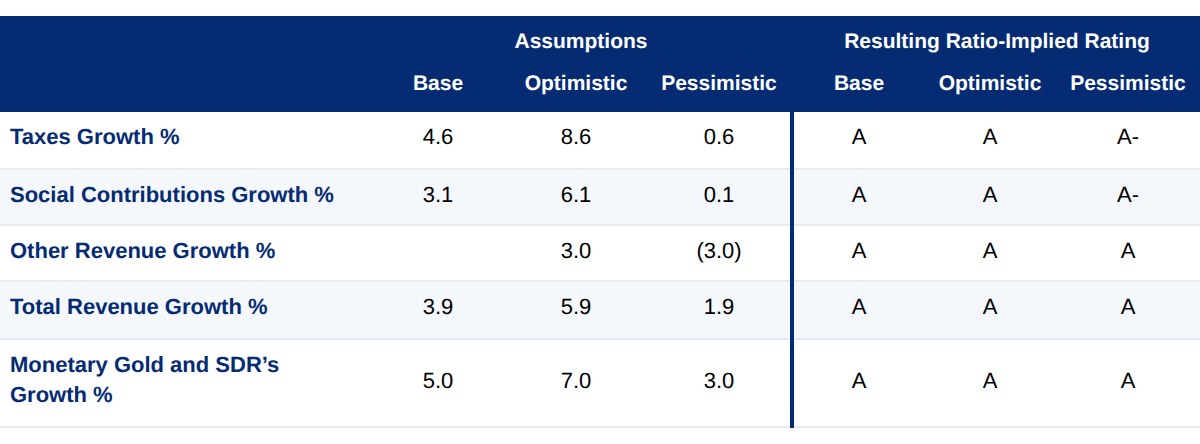
14. If the credit rating is assigned to an asset-backed security, a description of: (i) the representations, warranties, and enforcement mechanisms available to investors; and (ii) how they differ from the representations, warranties, and enforcement mechanisms in issuances of similar securities, as required by Paragraph (a)(1)(ii)(N) of Rule 17g-7:
This credit rating is not assigned to an asset-backed security.
Attestation Form
In compliance with the US Securities and Exchange Commission (SEC) Rule 17g-7(a), the Egan-Jones analyst who published the report is responsible for the rating action and to the best knowledge of the person:
- No part of the credit rating was influenced by any other business activities, - The credit rating was based solely upon the merits of the obligor, security, or money market instrument being rated, and - The credit rating was an independent evaluation of the credit risk of the obligor, security, or money market instrument.
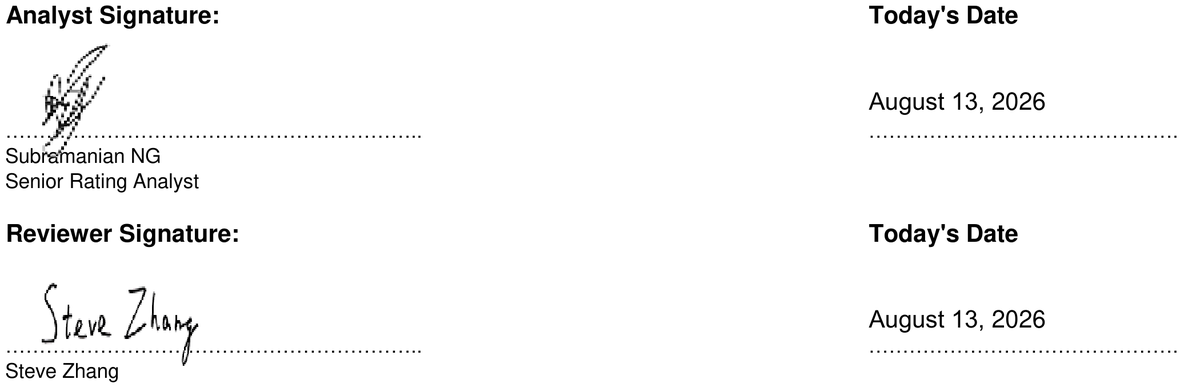 Analyst: Subramanian NG, Senior Rating Analyst. Reviewer: Steve Zhang, Senior Rating Analyst. Both dated August 13, 2026.
Sovereign Rating Methodology (Non-NRSRO)
Scope and Limitations. Sovereign Issuer Credit Quality Ratings (CQR) are a forward-looking assessment of a sovereign’s capacity and willingness to honor its existing and future obligations in full and on time. Sovereigns are assigned two CQRs: a Local-Currency CQR, which reflects the likelihood of default on debt issued and payable in the currency of the sovereign, and a Foreign-Currency CQR, which is an assessment of the credit risk associated with debt issued and payable in foreign currencies.Key Rating Drivers. Egan-Jones’ approach to sovereign risk analysis is a synthesis of quantitative and qualitative judgments. The quantitative factors Egan-Jones uses are:
- Debt in relation to GDP. - Surplus or deficit in relation to GDP. - Debt plus potential under-funding of major banks in relation to GDP. - Interest expense in relation to taxes. - GDP growth. - Foreign reserves in relation to debt.
Debt levels for many sovereign issuers have increased at an accelerating rate over the past decade, affecting implied ratings. Egan-Jones also considers unemployment levels and funding costs. Egan-Jones recognizes that no model can fully capture all the relevant influences on sovereign creditworthiness, meaning that its sovereign ratings can and do differ from those implied by the rating model. Some of the qualitative factors that impact its ultimate assessment of credit quality include the flexibility, stability and overall strength of the economy, efficiency of tax collection, acceptance of contract law, ease of doing business, trade balances, prospects for future growth and health and monetary policy, and economic freedom. These subjective and dynamic qualitative issues are not captured by the model but affect sovereign ratings.
For additional information, please see Exhibit 2: Methodologies in Egan-Jones’ Form NRSRO.
Copyright ©2026, Egan-Jones Ratings Company, Inc. (“Egan-Jones”). All rights reserved. The information upon which Egan-Jones ratings and reports are based is obtained by Egan-Jones from sources Egan-Jones believes to be accurate and reliable. Egan-Jones relies on third party reports and information and data provided and Egan-Jones has not, unless required by law or internal policies/procedures, independently verified or performed due diligence related to the accuracy of information, data or reports. Egan-Jones has not consented to, nor will consent to, being named an “expert” under federal securities laws, including without limitation, Section 7 of the Securities Act of 1933. Please note that expected or final ratings are not recommendations to buy, hold or sell the securities. Egan-Jones is not an advisor and is not providing investment advice, strategy or related services. Egan-Jones and its third-party suppliers (“Suppliers”) hereby disclaim any representation or warranty, express or implied, as to the accuracy, timeliness, completeness, merchantability, and fitness for any particular purpose or non-infringement of any of such information. In no event shall Egan-Jones or its directors, officers, employees, independent contractors, agents, representatives, or Suppliers (collectively, Egan-Jones Representatives) be liable (1) for any inaccuracy, delay, loss of data, interruption in service, error (negligent or otherwise) or other circumstance or contingency within or outside the control of Egan-Jones or any Egan-Jones Representative, in connection with or related to obtaining, collecting, compiling, analyzing, interpreting, communicating, publishing or delivering any such information. Ratings and other opinions issued by Egan-Jones are, and must be construed solely as, statements of opinion and not statements of fact as to credit worthiness or recommendations to purchase, sell or hold any securities. A report providing an Egan-Jones rating is neither a prospectus nor a substitute for the information assembled, verified and presented to investors by the issuer and its agents in connection with the sale of the securities. Egan-Jones is not responsible for the content or operation of third party websites accessed through hypertext or other computer links and Egan-Jones shall have no liability to any person or entity for the use of such third party websites. This publication may not be reproduced, retransmitted or distributed in any form without the prior written consent of Egan-Jones. Egan-Jones ratings are subject to disclaimers. Egan-Jones is not an NRSRO (as defined by the SEC) for sovereign/municipal issuers and structured finance/ABS issuers.
Appendix A - Recent CLO Rating Actions
Egan-Jones against the other NRSRO on the same tranche, with collateral test cushions.
The ten most recent Egan-Jones CLO tranche ratings are shown below alongside the other NRSRO’s equivalent rating on the same tranche and the current collateral test cushions. Every rated tranche is listed in the complete Egan-Jones CLO ratings table at [egan-jones.io/non-nrsro-ratings/clo](https://egan-jones.io/non-nrsro-ratings/clo).
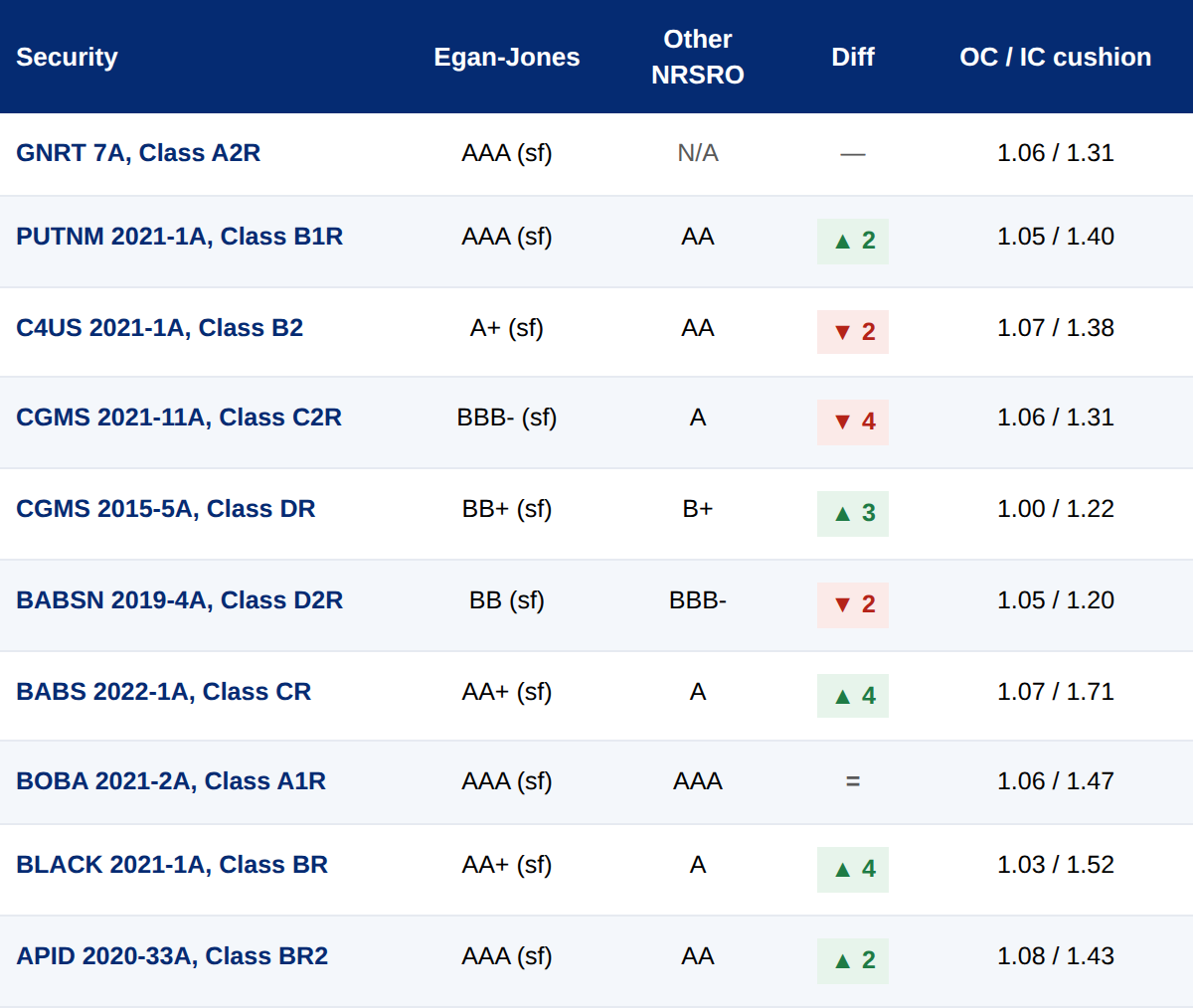 Egan-Jones Ratings Company CLO rating reports; report data as of 05/13/26.
Diff is the gap in notches between the Egan-Jones rating and the other NRSRO’s equivalent rating on the same tranche, measured on a 22-step scale from AAA to D. Green is Egan-Jones higher; red is Egan-Jones lower; “=” is a match.Cushion is the current test level divided by its trigger, so a figure below 1.00 means the test is failing. “n/a” appears where the report shows no test of that type for the class, and “—” where no comparison is available because the tranche is unrated by one of the two. Egan-Jones ratings shown here are not NRSRO ratings.
Sources & Footnotes
1. Jean-Luc Mélenchon’s proposal to cancel the roughly €600 billion of French public debt held by the Banque de France, and the reaction to it, reported by Euronews, August 27, 2026. 2. Carmen M. Reinhart and Kenneth S. Rogoff, This Time Is Different: Eight Centuries of Financial Folly (Princeton University Press, 2009). Table 6.1 records eight French external defaults between 1500 and 1800 (1558, 1624, 1648, 1661, 1701, 1715, 1770 and 1788); Table 6.2 adds a ninth episode in 1812, after which France has not defaulted. The underlying paper is NBER Working Paper 13882, which cites the pre-1800 count of eight. Counts of eight and nine differ only in whether the 1812 episode is included. 3. INSEE, In 2025, the public deficit stands at 5.1% of GDP, the public debt at 115.6% of GDP, published March 27, 2026. Maastricht debt stood at €3,460.5 billion at end-2025, up from 112.6% of GDP in 2024. 4. On the OECD’s comparable basis, France collected 43.5% of GDP in tax in 2024, second only to Denmark (45.2%) among the 38 member countries (OECD, Revenue Statistics 2025, as charted here). On Eurostat’s wider measure France recorded taxes and social contributions of 45.3% of GDP in 2024, again second behind Denmark (45.8%) and ahead of Belgium (45.1%), against an EU-27 average of 40.4% (Eurostat). The spending side matches: total public expenditure reached 57.0% of GDP in 2023, among the highest in the euro area and 7.5 percentage points above the euro-area average, with social protection alone at 32.2% of GDP against 27.2% (Banque de France). 5. The most recent attempt: Prime Minister Bayrou’s 2026 budget proposed €43.8 billion of savings, including an “année blanche” freeze on pensions and welfare benefits and the removal of two public holidays. He staked his government on it and lost the confidence vote 364 to 194 on September 8, 2025 (NPR; measures per Euronews). Nationwide protests followed on September 10, 2025, with more than 450 arrests and 80,000 police deployed (PBS NewsHour), and again on September 18; his successor then suspended the 2023 pension reform until after the 2027 election. The package was never enacted. The precedent is the 1995 Juppé plan, a social-security consolidation intended to cut the deficit from 5% to 3% of GDP, which drew about one million demonstrators on December 12, 1995 and more than six million strike-days that year before the government dropped the retirement measure (France 24). France also raised the retirement age from 62 to 64 in 2023, drawing 457 arrests and 441 injured police officers on March 23 alone (Euronews). 6. Article 123 of the Treaty on the Functioning of the European Union, which prohibits overdraft facilities and the direct purchase of debt instruments by the European Central Bank or national central banks from governments and other public bodies. 7. Board of Governors of the Federal Reserve System, press release creating the Commercial Paper Funding Facility, October 7, 2008.
Additional Sources
- Exhibit 1: OECD Main Economic Indicators, long-term government bond yields, 10-year, France, via FRED (series IRLTLT01FRM156N), monthly averages through June 2026; latest market yield of 4.117% at August 28, 2026 via Trading Economics. - Appendix A CLO table: Egan-Jones Ratings Company CLO rating reports, published at [egan-jones.io/non-nrsro-ratings/clo](https://egan-jones.io/non-nrsro-ratings/clo). - French Republic rating analysis: Egan-Jones Ratings Company, French Republic - Rating Analysis, August 13, 2026 (non-NRSRO sovereign rating). Annual ratios sourced to the IMF; peer and fiscal figures to Thomson Reuters and International Financial Statistics. - Opening image: Eugène Delacroix, Liberty Leading the People (1830), Musée du Louvre, Paris.